
|
|
| | Book | | | ✉ Contact | | | +212 600 608 608 |
 Français
  English
  Español
  Italiano
  Deutsch
  Nederlands
  Português
  Polski
  Norsk
Norsk  Svenska
  Dansk
Dansk 
10 Team Building Ideas in Marrakech: Activities for 10, 15, 20 Guests at Riad Vendôme
Team-building ideas in Marrakech: team cooking class, souk rally, quad biking in the Agafay desert, riad olympics, group hammam and spa. Riad Vendôme exclusive hire for 10, 12, 14, 15, 20, 25, 30, 35, 40, 50 guests. Meeting room, rooftop, pool. Éric organises bespoke events.
A team-building event in Marrakech guarantees a change of scenery that bonds your teams. At Riad Vendôme, Éric organises bespoke activities that alternate between challenge, discovery and socialising. Here are the 10 most requested activities among companies.
In brief: Team building ideas in Marrakech
- 10 team building ideas Marrakech: quad biking, cooking, olympics, treasure hunt. Private riad Vendôme medina, free quote within 3h.
- Team cooking class, souk rally, quad biking in the Agafay desert, riad olympics, group hammam and spa.
- Exclusive riad hire for 10 to 50 guests; meeting room, rooftop, pool.
- Direct booking / WhatsApp: +212 600 608 608
The 10 Best Team Building Activities in Marrakech
Book your event +212 600 608 608
1. Quad in the Agafay desert: Quad biking in formation through the desert for 30 min from Marrakech. Adrenaline guaranteed. €45/person.
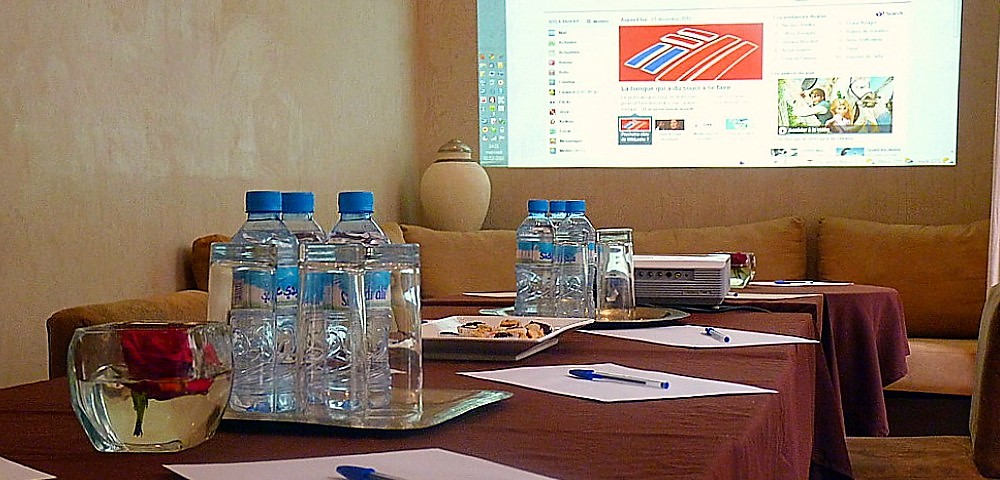
2. Team Cooking Class: In groups of 5, prepare a complete Moroccan meal. The best team is judged by the chef. From €48/person.
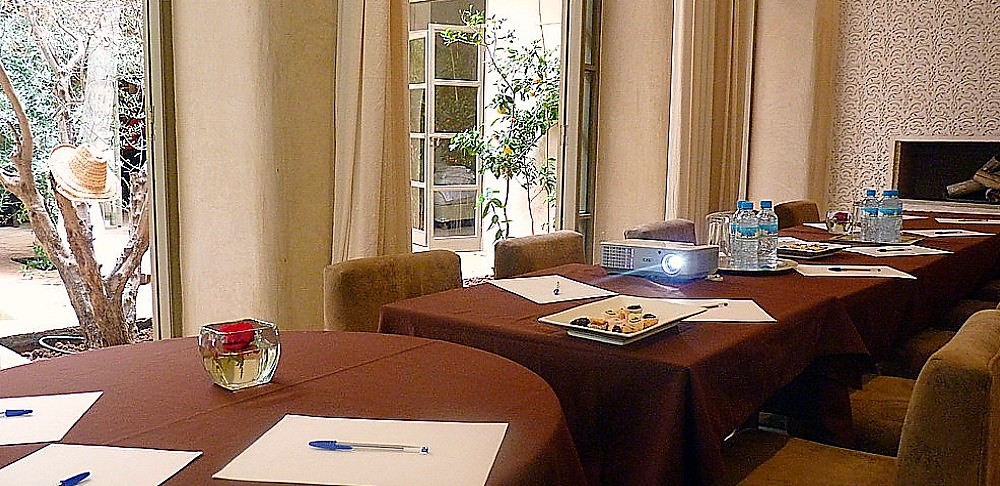
3. Medina treasure hunt: Route with riddles through the medina lanes. Smartphone app + guide. 2 hours of adventure. €30/person.
4. Moroccan Olympics: Events at the riad: archery, boules, skill games, Moroccan culture quiz. Team competition. €20/person.
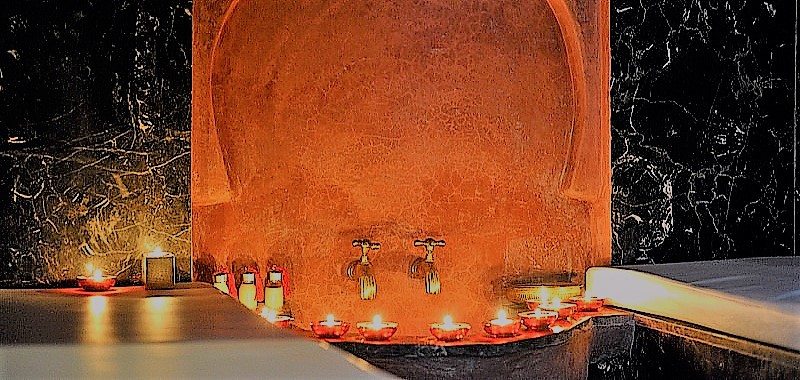
5. Hammam and team massage: Group traditional hammam + massage. A moment of relaxation and letting go. €45/person.
6. Golf challenge: Impromptu tournament on one of Marrakech's 11 courses. All levels. Green fee + transport: €74-€96/person.
7. Ourika Valley Hike: Walk to the waterfalls, Berber picnic, village visit. Half-day. €40/person.
8. Pottery or Zellige Workshop: Introduction to traditional Moroccan arts. Everyone takes home their creation. €25/person.
9. Gala Dinner Under the Stars: On the rooftop of the riad. Gourmet menu, Gnaoua musicians (traditional Moroccan music, UNESCO-listed), magical atmosphere. Team bonding guaranteed.
10. Escape game Marrakech: Several themed escape rooms in the city centre. In teams of 4-6. €20/person.
Éric designs your bespoke programme. Contact him at +212 600 608 608. See also: seminar at Riad Vendôme.
Why Most Corporate Team Building Fails
Most corporate groups who arrive at Riad Vendôme have already been through team building somewhere else, and a fair number describe it with a shrug. That reaction is worth taking seriously. An activity people merely endure is not a neutral outcome: it quietly confirms to a team that the company will spend money on their togetherness without spending much thought on it. What separates an event people tolerate from one they still refer to months later is almost never the activity itself. It is whether the activity gave them something real to do together. The failures we see are designed backwards: an activity chosen because it photographs well or because it was available, dropped into a tired afternoon, with the bonding left to look after itself. Every idea listed higher up this page works when it is chosen for a reason.
A useful test before booking anything: if you asked a participant a fortnight later what the point of it was, could they answer without guessing? If not, the programme needs rethinking rather than a bigger budget.
Start With the Objective, Not the Activity Menu
"Team building" covers situations with almost nothing in common, and treating them as interchangeable is the most expensive mistake we watch companies make. The format that serves one group can actively damage another.
- A newly merged team needs mixing, not performance. Anything that lets each former group sit together in its old shape entrenches exactly what you are trying to dissolve. Allocate the small groups yourself, before anyone walks into the room.
- A remote team meeting in person for the first time needs unstructured time more than a challenge. They already work well; what they lack is the informal contact a shared office gives for free. One shared task, then let the meal run long.
- A team in conflict is the hardest case and the one handled worst. A competitive format will not dissolve a disagreement; it hands it a scoreboard. Calm, low-stakes, side-by-side activity works better, because conversation can happen without anyone facing anyone down.
- A team celebrating a good year does not need a challenge at all. The reward is the point. Bolting a workshop onto it reads as a company that cannot say thank you without asking for something back.
If you cannot say which of those you are in, that is the conversation to have before choosing between a cooking class and the desert: Éric asks it anyway when planning a corporate retreat.
Shared Effort With a Real Outcome
The most reliable pattern we see: groups who make something real, then use what they made, outperform groups given a contest invented to produce a winner. Cooking a Moroccan meal and then sitting down to eat it works not because the cooking is hard, but because the outcome is honest. The food is either good or it is not, everyone can see everyone else's contribution, and the payoff arrives in a form nobody has to pretend to enjoy. Manufactured competition asks people to care about something they know does not matter; most adults are polite enough to play along, and that politeness is the problem. You get compliance, and compliance leaves no residue. A real task also creates natural roles rather than assigned ones, and colleagues learn something about each other without being told they are learning it. See our group cooking class, and raise dietary requirements early rather than on the day, as set out on the dietary options page.
Designing for the Quiet Participant
Every team has people energised by a room and people drained by one, and badly designed activities systematically reward the first group. Large formats with a single focus of attention hand the day to the most confident voices. They enjoy it and say so; those who found it exhausting rarely say anything at all, so the feedback looks positive by the very mechanism that made the event fail for part of the room. The fixes are unglamorous. Keep working groups small, so speaking does not mean competing for the floor. Give each group a task with genuinely separate strands, so a quieter person can be useful without interrupting. Prefer activities where hands are busy: conversation flows more easily side by side over a chopping board than across a circle of chairs. Avoid performance in front of everyone unless everyone volunteered, and treat a request to sit out as information rather than a problem. In our experience the best conversations of a corporate stay happen in the gaps, so programme the gaps deliberately and then resist filling them.
Physical Activities and Who Is Quietly Excluded
Quad biking, hiking and anything else that depends on the body carry a risk that rarely appears in the planning email. A group is never uniform in fitness, confidence, mobility, age or health, and the people for whom an activity is a problem are the last to say so, because saying so means announcing something private to colleagues. What looks like consent is often somebody deciding it is easier to cope than to explain.
The rule we apply: never build a programme where opting out is visible. If the alternative to the desert is "wait at the riad", you have not offered a choice, you have created a category of people who missed the day. Offer genuine options of comparable appeal, framed as a preference rather than an exemption, and let people choose before they travel.
In practice that means pairing an active option with a hammam session or an unhurried afternoon by the pool, with both groups reconvening for the same meal, which is where the day is stitched back together. Heat is the other factor nobody weighs properly: an outdoor activity that is fine in spring is a different proposition in high summer, and pushing a group through it will cost you the evening. Our hammam and spa and the pool work as real alternatives rather than consolation prizes; step-free access is worth checking in advance, on our accessibility page.
When Competition Builds a Team and When It Damages One
Competitive formats are not the enemy. Used well they create energy quickly, give a shapeless afternoon a spine, and let people who barely know each other interact without inventing a reason. The question is what the contest measures and who is in which team. Competition builds a team when the stakes are transparently trivial, when the teams cut across real reporting lines, and when what is judged is not something anyone is professionally judged on already, nobody's career depends on their pastry. It damages a team when it maps onto existing fault lines, sales against operations, the acquired company against the acquiring one, one office against another, because then it is not a game but a rehearsal of a real dispute with permission to be blunt. It also damages a team when losing stings, or when a manager takes it seriously in front of people who report to them. Draw the teams yourself: self-selection reproduces the org chart you were hoping to disrupt. End cleanly, naming the winners lightly before moving into something shared.
The Facilitator, and What Happens When a Manager Runs It
Someone has to hold the shape of an activity: keep the timing honest, notice who has gone quiet, redirect a group that has drifted, decide when to stop. When that person is an outsider, the group can be a group. When it is the manager, something subtle goes wrong. Everyone is still at work; the manager is watching the activity and, unavoidably, watching their people, and their people know it. Enthusiasm becomes something to display. There is a further cost managers rarely anticipate: while they are running it, they are not in it. The person with most to gain from seeing their team behave informally spends the session checking the clock and chasing stragglers. If the objective involves the manager's own relationship with the team, they should be a participant and someone else should run the day. That does not require an expensive consultant. In a riad it is usually whoever leads the activity, the chef in the kitchen or the guide on the walk: no stake in the internal politics, and a natural pace. Éric coordinates that side of a stay directly, see the owner's page.
Where the Activity Sits in the Day
Timing is the variable companies control most easily and consider least. An activity scheduled straight after a long working session almost never lands, for no mysterious reason: the group has already spent its attention. People arrive depleted, participate correctly and remember nothing, and the event gets blamed when the real culprit was the blocks either side of it. What we watch work is a morning that asks something of people, an afternoon that asks nothing, and an evening around one table. The structured morning creates a shared reference point while everyone is fresh; the open afternoon is where relationships actually form, precisely because nothing is scheduled; the long communal dinner consolidates both. If an activity must follow working sessions, change the register entirely, physical, sensory, informal, no cognitive load, and shorten it. A tired group can enjoy a hammam; it cannot enjoy a puzzle. And leave a real gap after arrival: groups who fly in and go straight into an activity are still travelling in their heads.
Judging Honestly Whether It Worked
Most team-building evaluation is designed to produce a reassuring answer. A satisfaction form handed out at the end of a good dinner in a warm country measures the dinner and the country. People are generous in the moment, and generous to the colleague who organised it, so the score comes back high and nothing is learned. The honest signals are quieter and arrive later. Are people still referring to it weeks afterwards, unprompted? Have relationships that were formal become direct? Do colleagues from different parts of the business now approach each other without routing through a manager? None of that appears on a form filled in on the coach to the airport. It is worth asking, too, whether the activity was the active ingredient at all. Often it is not: a genuine change of place does much of the work by itself, which argues not against planning but for planning less densely, and for choosing a setting that works on your behalf: the trade-offs are set out on our venues comparison page.
If a group asks to come back and requests the same format, that is the most reliable verdict available. Repeat bookings tell you more than any feedback form, because they are paid for rather than filled in.
These team-building activities suit a Marrakech seminar for 10 guests just as well as one for 15 guests. For a group of 10 guests, we favour single-group activities. For 15 or 20 guests, we organise team competitions in the spirit of a corporate seminar in Marrakech.
Frequently Asked Questions
How much does a team-building event in Marrakech cost?
For 20 guests (1 activity + dinner): €1,500-2,500. For a complete seminar (3 days/2 nights, riad, activities, meals): €4,000-6,000.
What is the best time for a team building in Marrakech?
October-November and March-May: ideal climate (22-28°C), little rain, reasonable rates. Avoid July-August (too hot for off-site activities).
How do we choose a team-building activity that matches our objective?
Name the situation first. A newly merged team needs deliberate mixing, a remote team meeting in person needs unstructured time rather than a challenge, a team in conflict needs something calm and side by side, and a team celebrating a strong year simply needs the reward. The activity is chosen after that decision, not before it. Éric asks the question at the enquiry stage because the answer changes the shape of the whole day.
What do we offer a colleague who cannot join a physical activity?
Never a programme where opting out is visible. If the alternative to an outdoor activity is waiting at the riad, that is not a choice, it is a way of creating people who missed the day. We pair the active option with a hammam session or an afternoon by the pool of comparable appeal, present both as a preference rather than an exemption, and let guests choose before they travel.
Should our manager run the team-building session themselves?
Usually not. When the manager runs it, everyone is still at work: enthusiasm becomes something to display and the useful, awkward remark never gets made. There is a second cost, too, since a manager running the session is not taking part in it and learns less about the team than anyone else present. In a riad the chef or the guide leads naturally, with no stake in the internal politics.
Is a competitive format a good idea for a team that is not getting on?
Rarely. Competition works when the stakes are transparently trivial and the teams cut across the real reporting lines. It goes wrong when it maps onto an existing fault line, one department against another or an acquired company against the acquiring one, because it then becomes a rehearsal of the real dispute with permission to be blunt. For a group in conflict we would choose a shared task over a contest.
Where in the day should a team-building activity be placed?
An activity that follows a long working session almost never lands, because the group has already spent its attention. What we see work is a morning that asks something of people, an afternoon that asks nothing, and a long communal dinner. If the activity must come after working sessions, change the register completely to something physical, sensory and informal, and keep it short.
How do we tell afterwards whether the team building actually worked?
Not from the form handed out after a good dinner, which mostly measures the dinner. The honest signals arrive later and are quieter: whether people still refer to it unprompted weeks afterwards, whether formal relationships have become direct, whether colleagues in different parts of the business now approach each other without going through a manager. A group asking to come back and repeat the format is the most reliable verdict of all.
What Actually Works for Team Building - Lessons from 12 Years of Corporate Events
Éric has organised more than 200 corporate events at Riad Vendôme since 2013, ranging from 10-person agency offsites to 40-person pharmaceutical conference groups. The pattern that produces the best results, measured by participant feedback and repeat bookings: is always the same: a meaningful shared activity in the morning, unstructured free time in the afternoon, and a communal dinner in the evening. The structured morning creates a shared reference point; the free afternoon lets relationships develop naturally; the dinner consolidates both.
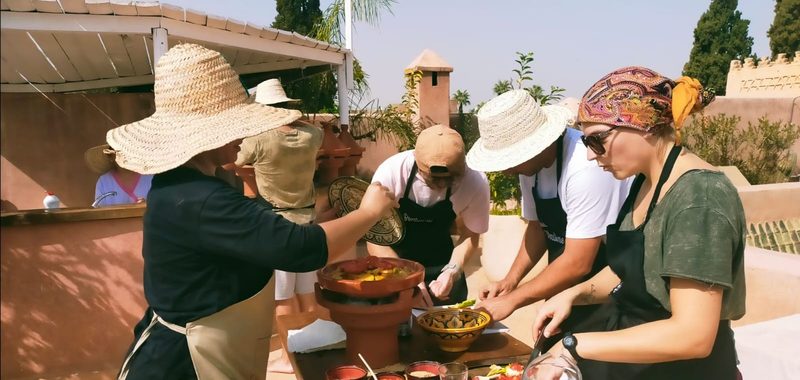
The most effective morning activities, consistently, are the cooking class with Naima and the guided medina walk. The cooking class wins because it is genuinely interactive (teams of 3-4 cook a complete Moroccan menu from scratch), immediately gratifying (you eat what you made), and culturally immersive (Naima explains the spice origins, the regional variations, the family recipes). The medina walk wins because getting slightly lost together, negotiating the souks, and sharing the overwhelm creates bonding that a conference room never can.
What doesn't work: activities that are too competitive, too physical (not everyone is at the same fitness level), or too long (over 3 hours creates fatigue rather than energy). The city itself does much of the team-building work: groups from corporate environments consistently report that the total sensory change of being in the medina is enough to shift team dynamics in ways that a team day in a UK hotel never achieves.
⭐
For 20 people, a team building day (one activity + dinner) costs €1,500-€2,500. A full corporate retreat (3 days/2 nights with 2 activities) starts from €155/person all-inclusive at Riad Vendôme. The most popular activity for corporate seminars in Marrakech is quad biking in the Agafay desert (€50/person), followed by the Moroccan cooking class with Chef Naima (€25-35/person). Both can be combined in a single afternoon session. The Moroccan cooking class with Chef Naima (€25-35/person) is the most popular activity for corporate groups at Riad Vendôme. It can be organised entirely within the riad, in teams of 4-6 preparing different dishes, with a fun competitive element. The quad biking in the Agafay desert (€50/person) ranks second for groups wanting an adrenaline experience. There are no non-stop flights from the United States; from New York allow about 8 to 9 hours via Casablanca on Royal Air Maroc, which hubs there. From Canada, Royal Air Maroc runs a seasonal non-stop from Montreal to Casablanca, then a short connection to Marrakech. The riad is about 20 minutes from Marrakech-Menara airport, and US, Canadian and EU citizens do not need a visa for stays under 90 days. Riad Vendôme is at 217 Derb El Halfaoui, in the Dar El Bacha district of the Marrakech medina. It is a 7-minute walk from Jemaa El-Fna square, close to the Koutoubia and the souks, so you reach the main sights on foot without needing a taxi. A member of staff meets you at the nearest vehicle drop-off point on arrival. You contract directly with the riad, not through an OTA or an aggregator: one single point of contact from the first enquiry to the invoice. Send your dates and group size on WhatsApp at +212 600 608 608, or go through our local DMC in Marrakech, and you receive a written quote, at our net rate, within 24 hours. There is no automated booking engine: every stay is confirmed by a person, and the payment terms are set out in the quote you receive. Yes, Riad Vendôme can be hired exclusively. The main riad has 12 rooms and goes up to 20 rooms with a partner riad 100 metres away, for exclusive hire of up to 50 guests. During an exclusive hire there are no other guests: the pool, hammam, jacuzzi and rooftop are reserved for your group alone.How much does a team building day in Marrakech cost?
Which team building activity is most popular for corporate groups?
What is the best team building activity for a corporate seminar in a Marrakech riad?
How long is the flight to Marrakech from the US and Canada?
Where exactly is Riad Vendôme located in Marrakech?
How do I book, and how quickly do you reply?
Can the whole riad be privatised, and for how many guests?
Can I book a seminar in Marrakech for 2027?
Yes. Riad Vendôme takes seminar, incentive and team-building bookings for 2026 and for 2027. The riad is hired exclusively, 12 rooms and 36 guests, up to 50 with the partner riad 100 metres away. The busiest windows, March to May and October to December, are blocked several months ahead: for a spring 2027 seminar, ask for the quote now. Exact rate according to your dates and the number of delegates, answer within 24 hours.
The Riad Vendôme is classified by the Moroccan Ministry of Tourism.
📈 Marrakech vs Paris, Barcelona: the comparison
Price, climate, change of scenery: why Marrakech is the best seminar destination.