
|
|
| | Book | | | ✉ Contact | | | +212 600 608 608 |
 Français
  English
  Español
  Italiano
  Deutsch
  Nederlands
  Português
  Polski
  Norsk
Norsk  Svenska
  Dansk
Dansk 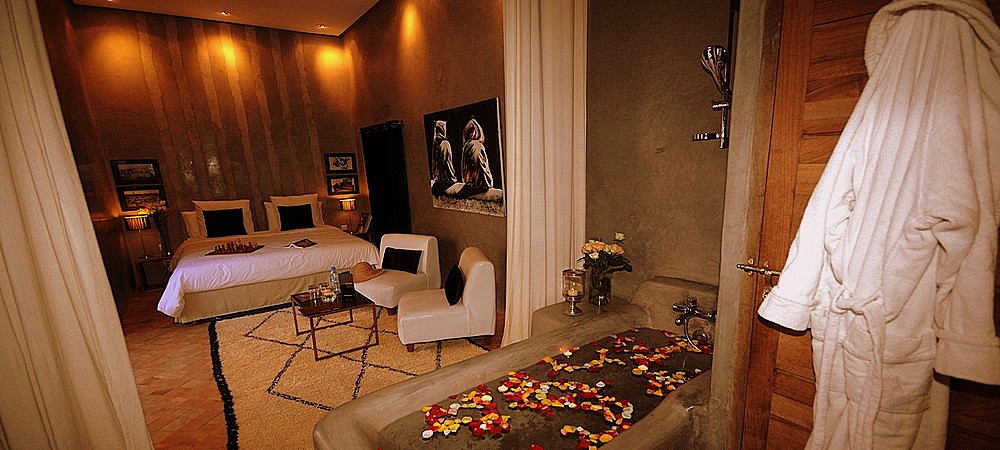
Corporate Retreat in Marrakech: Complete Planning Guide for 10, 15, 20 Guests
Guide corporate retreat in Marrakech: Riad Vendôme exclusive hire (12-50 people) combine meeting room (20 people), accommodation in rooms with en-suite, team-building (quad, cooking, hammam) and gala dinner. Rated 5/5 on Google Seminars. From €90/person/day all-inclusive.
After 15 years of organising seminars and hundreds of groups welcomed, I share everything I have learned. The classic mistakes, the real budgets, activities that work, and those that disappoint. By Éric, owner of the seminar in a private riad.
In brief: Corporate retreat planning guide
- Complete guide to planning a corporate retreat in Marrakech: venues, budget, team activities, logistics. For groups of 10-25.
- Riad Vendôme exclusive hire (12-50 people), meeting room (20 people), en-suite rooms, team-building (quad, cooking, hammam) and gala dinner.
- Rated 5/5 on Google Seminars; from €90/person/day all-inclusive.
- Direct booking / WhatsApp: +212 600 608 608
5 Mistakes That Ruin a corporate event
Quote seminar free +212 600 608 608
Mistake #1: Overloading the programme - Maximum 2 highlights per day. Leave free slots, that's where real team bonding happens.
Mistake #2: Reserving without licence alcohol - Many riads do not have one. Riad Vendôme has its licence: beers, wines, cocktails, champagne.
Mistake #3: Ignoring airport transfers - With 3-4 different flights, arrange a personalised welcome for each flight.
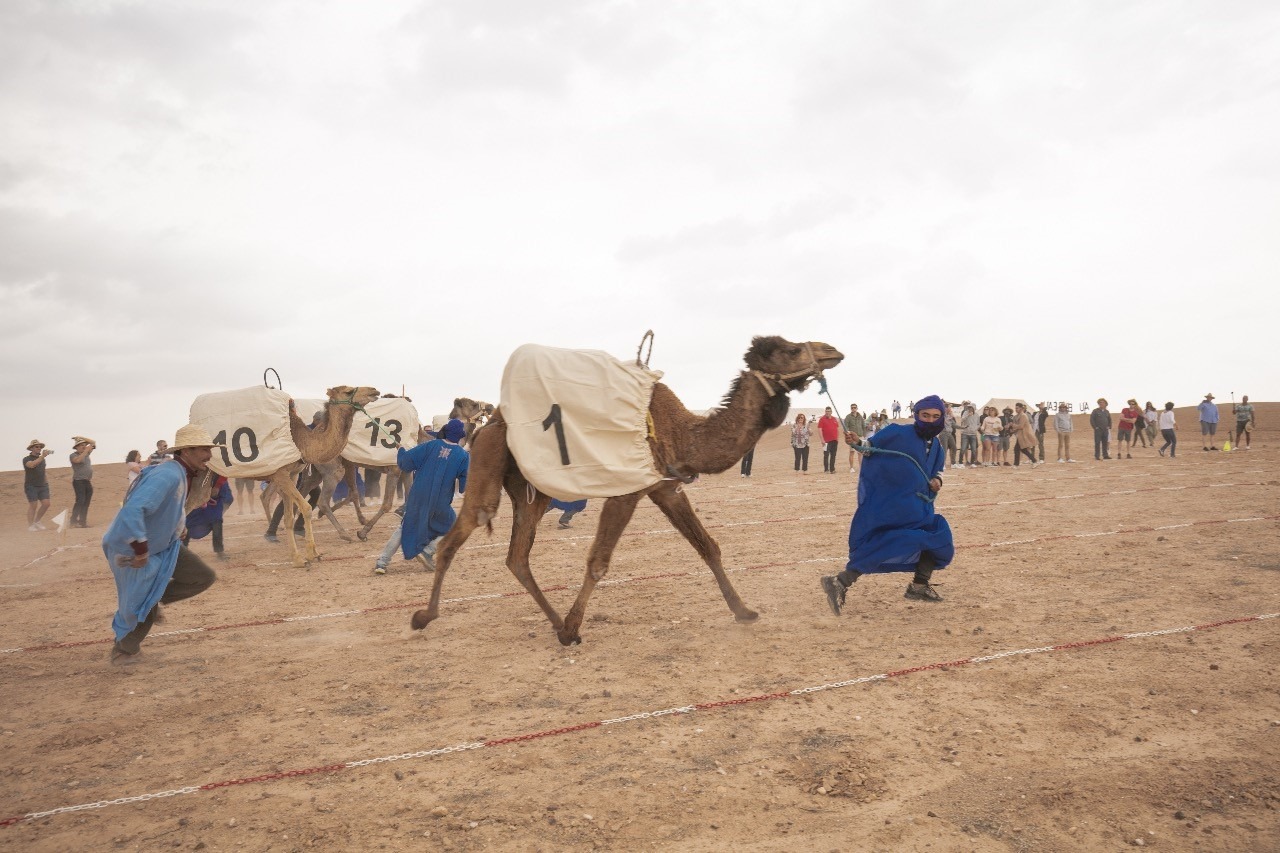
Mistake #4: Choosing the wrong month - July-August: 38-42°C. Opt for October-November or March-May (22-28°C).
Mistake #5: Using an agency back home - 30-50% markup. Work directly with an on-site organiser like Eric.
Realistic Budget: What It Really Costs
The budget depends directly on group size. A corporate retreat in Marrakech for 10 guests starts at €150/person for 2 days, i.e. €1,500 in total. A corporate retreat in Marrakech for 15 guests with full exclusive hire costs €200/person for 3 days, i.e. €3,000. A corporate retreat in Marrakech for 20 guests all-inclusive starts at €250/person. For a corporate event in Marrakech for 25 guests, expect €250/person and for a corporate event in Marrakech for 30 guests, around €280/person. The 10-guest format is the most affordable, 15 guests the most popular, and 20 guests offers the best size-to-intimacy ratio. The Marrakech seminar cost in a private riad is 40 to 60% lower than European destinations. Whether it's a 2-day, 3-day or 4-day Marrakech seminar, the value for money in a private riad remains unbeatable. The same budget also covers an incentive trip to Marrakech to reward your top team members.
| Item | Low budget | Moderate budget | High budget |
|---|---|---|---|
| flights return | 80 € | 150 € | 300 € |
| Accommodation 2 nights | 80 € | 120 € | 200 € |
| Catering (3 days) | 60 € | 90 € | 150 € |
| Room + equipment | included | included | 50 € |
| 1 activity team building | 20 € | 45 € | 100 € |
| Entertainment evening | 15 € | 30 € | 60 € |
| Transfers | 10 € | 15 € | 25 € |
| TOTAL / person | 265 € | 450 € | 885 € |
For 20 guests: €5,300 to €17,700 all-inclusive. 2 to 3 times cheaper than in France, with the sunshine on top.
Marrakech vs Other Destinations
Compared to Barcelona or Lisbon, a corporate event in Marrakech for 10 guests is 40% cheaper for equivalent services. For a corporate event in Marrakech for 15 guests, the saving reaches €5,000 over 3 days. And a corporate event in Marrakech for 20 guests costs the same as a corporate retreat for 10 guests in the London area.
| Criterion | Marrakech | Barcelona | Lisbon | France |
|---|---|---|---|---|
| flight from London | 3 hours, from €80 | 2 hours, from €60 | 2 hours 30 min, from €70 | Train 1-3 hours |
| Budget / person / day | 90-300 € | 150-400 € | 130-350 € | 150-500 € |
| Change of scenery | ★★★★★ | ★★★ | ★★★ | ★★ |
| Weather (Oct-May) | 22-28°C ☀ | 12-20°C | 12-22°C | 5-18°C |
Contact Éric on +212 600 608 608 for a free quote.
Choosing your venue? Read our guide: Riad or hotel for a seminar in Marrakech?
Why a Company Goes Abroad at All, and the Honest Case for Staying at Home
An offsite abroad is never the cheapest way to get a team into one room, and anyone proposing one should say so before someone else does. What travel buys is separation. A room booked down the road from head office is a room people leave at lunchtime to clear email, and return to with the same posture they had at their desk. Distance removes the option of stepping out. It also dissolves the informal hierarchy of the office, who sits where, who catches whom in the corridor, and replaces it with a setting nobody owns.
The counter-argument deserves a fair hearing, and putting it in your own proposal is more persuasive than letting a sceptic raise it. A domestic offsite costs less, consumes fewer working days, needs no passports, is far easier to move if the date collapses, and excludes nobody on grounds of travel. If the objective is one day of structured planning with a settled team, an aircraft adds expense without adding much. Travel earns its place when the objective needs consecutive days, an unbroken group and a genuine break in routine: a new strategy, two merged teams meeting properly for the first time, a year that needs resetting rather than reviewing.
Marrakech Measured Against the Usual European Offsite Cities
Most European companies shortlist the same cities, and for good reasons: short journeys, familiar suppliers, no currency to think about, and colleagues who know what to expect. Marrakech is not automatically better. It competes on a few specific things, and the proposal is stronger for judging it only on those.
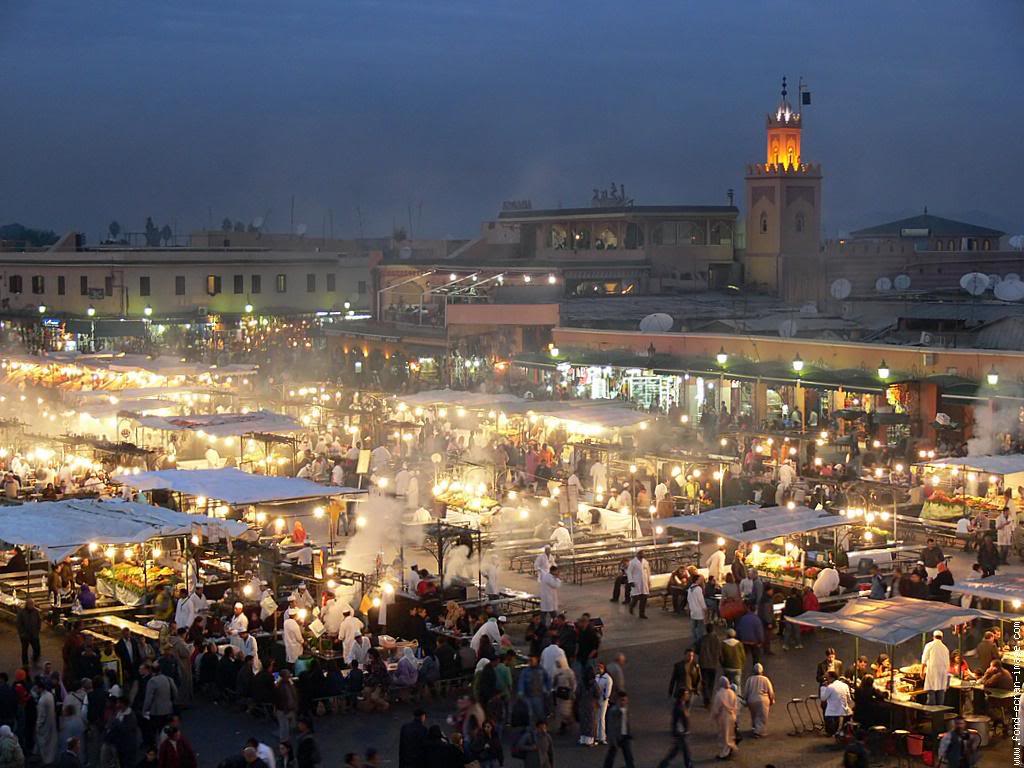
The first is reach. Marrakech is served directly from a wide spread of European airports, which matters more than raw distance once your people are not all in one country. The second is the change of scenery, and this is the variable a European city cannot match for a European team: a medina, a different language, a different rhythm to the day, all reached on a short-haul flight rather than a long-haul one. The third is what a given budget buys once you land: private venue capacity, catering and hospitality go further here, which is why a group that would be scattered across floors of a chain hotel elsewhere can have a whole house to itself. The tables further up this page and our fuller destination comparison set out the detail.
What Marrakech Does Not Offer, and When That Matters
A proposal that only lists advantages reads as advocacy, and finance directors discount it accordingly. Marrakech is not a large congress city and should not be sold as one. It has no dense convention district built around exhibition floors, interpretation booths and staged launches for several hundred delegates. It is not on a rail network, so a cancelled flight has no train alternative for a delegate who must arrive. Specialist technical production and named external speakers may have to be brought in rather than sourced locally. And it is not a business-travel hub, so an offsite here does not bolt onto a week of client meetings.
There is a physical limitation to be honest about too. The medina is a historic quarter of narrow lanes; vehicles cannot reach every door, and buildings of this age are not laid out for step-free movement throughout. If someone in your group needs level access, raise it at enquiry stage rather than on arrival: see our notes on accessibility in a medina riad. If your event is a plenary for a very large audience, the honest answer is a purpose-built venue, and our page on larger corporate groups explains where the format changes.
Three People You Have to Convince, and Three Different Answers
An overseas offsite is rarely rejected outright. It is usually deferred, because one of three people was answered with an argument aimed at somebody else. They ask different questions, and each deserves its own paragraph in the proposal.
The finance director is not asking whether the team deserves it. They are asking what the committed exposure is, how much of it is fixed once signed, how many suppliers will invoice, what the cancellation and deferral terms are, and whether the number can move after approval. Answer with a written quote from a single contracted supplier, stating exactly what is included and what is not, rather than an estimate assembled from separate bookings. One counterparty and defined terms settle more of this than any argument about value.
The HR lead is asking who this excludes: caring responsibilities, passport validity, medical needs, dietary and religious observance, mobility, and anyone who simply does not want to travel. They will also ask what happens if a colleague falls ill abroad, whether attendance is genuinely voluntary, and whether someone who does not drink, does not ride a quad bike and does not want to be in a swimming pool still has a full experience. Have the answers before the meeting, not after it.
The sceptical team member is asking something blunter: is this a week of compulsory enthusiasm, and is it being spent instead of something I would rather have. That objection is answered by the agenda, published before anyone books. State plainly what is compulsory and what is optional, protect at least one evening as genuinely free, and make it clear the trip has work in it. People forgive a demanding programme far more readily than a vague one.
Arriving From Several Offices: Travel as a Decision Factor
When everyone leaves from one city, the destination question is simple. When a team is spread across offices, the destination is effectively chosen by the worst-connected office rather than the average one. Compare the longest journey on the list, then ask what it does to the first working session. A colleague who lands late at night is not usable at breakfast, and a programme that opens with its most demanding item after a scattered arrival wastes that item.
Practical planning follows. Group arrivals into windows rather than tracking each one separately, decide whether the arrival day is a travel day or a working day and say which in the invitation, and confirm the venue can meet several inbound flights rather than one coach. Entry requirements differ by nationality, so check the passports on your team that need the most lead time rather than the ones that need the least, our entry and passport notes and flight routes page are the starting point.
The Perception Problem: An Offsite Abroad Can Look Like a Junket
This is the objection nobody voices in the approval meeting and everybody voices afterwards. It is not really about the destination; it is about whether the trip visibly produced anything. Companies that get this right make the programme carry the justification. The written objective exists before the venue is chosen. The agenda is circulated internally, not only to attendees. The working sessions are the headline of the communication and the leisure is the margin, not the reverse. Decisions taken are written up and shared with people who did not go.
Two further habits help. Do not schedule an overseas offsite into the same fortnight as a cost-control announcement, whatever the calendar says about availability. And accept that the programme has to be good enough to have justified travelling for: if the same two days could plausibly have happened in a meeting room at home, the criticism is correct and no framing fixes it. That is a test of the agenda rather than of the destination, and our sister guides on running the working day in a riad and on making team building actually work deal with the content itself.
Getting the Timing Right in a Corporate Calendar
Two calendars have to agree, and the corporate one is usually harder. Avoid quarter end and year-end close, audit periods, peak trading weeks and the fortnight around a major launch. Budget season cuts both ways: it is when the money is decided, so the ask often has to land before anyone can say yes, which means opening the approval conversation considerably earlier than the trip feels. Check school holidays in every country your people live in, not just the head office one, and check public holidays at both ends.
Then there is midweek versus a weekend, and it is worth stating the trade-off openly rather than deciding quietly. Midweek costs working days and keeps the trip unambiguously professional. A weekend preserves working days but takes personal time, and a team that feels its weekend has been requisitioned arrives already resentful. Whichever you choose, protect the date early: the comfortable months for Marrakech are also the months group venues fill first, which our page on when to visit Marrakech covers season by season.
Who Should Not Choose an Overseas Offsite
Some proposals should not be written. It is better to reach that conclusion yourself than to have it reached for you halfway through approval.
- Teams with no articulated objective. If the answer to "what will be different afterwards" is morale in general, a domestic day out achieves the same for less.
- Organisations in the middle of redundancies or a visible cost-reduction programme. The trip may be defensible; it will not be perceived as defensible.
- Groups where a meaningful proportion cannot travel. An offsite half the team watches on a video call is worse than no offsite.
- Teams in active conflict. Travel intensifies whatever a group already is; it does not repair a broken relationship.
- Dates that cannot be protected. If attendance erodes as diaries fill, the fixed costs are committed and the value is not.
- Projects with no internal owner. Someone has to hold the logistics, or the trip gets assembled badly by several people at once.
- Budgets that only reach the destination by removing something the team values more. Ask the team; the answer is often instructive.
What to Put in the Proposal So It Is Approved First Time
Approvals stall on missing information rather than on disagreement. A proposal that pre-empts the second round of questions usually clears in the first. Keep it to a single page, with the detail attached behind it.
- The objective in one sentence, written as an outcome rather than an activity.
- The dates, and why those dates rather than the obvious alternative.
- Who attends, who does not, and how those who do not are kept informed.
- The total cost as a single all-inclusive figure taken from a written quote, with a plain list of inclusions and exclusions.
- The alternatives considered, including staying at home, and the reason each was set aside.
- The risks, travel disruption, illness, documents not obtained in time, and what happens in each case.
- The named owner of delivery, and the counterparty on the ground.
- The outline agenda, so the approver sees the working content without asking for it.
- How success will be judged, and when you will report back on it.
If you want the underlying quote before writing any of this, send the dates, the group size and the offices people travel from. You will get a written all-inclusive figure to build the proposal around, from the people who will actually host the group: see how the organisation works, our local DMC service and the main corporate retreat page.
Realistic Budget: What a Marrakech Corporate Retreat Really Costs
The budget depends entirely on group size. Here are the realistic figures per person for a 3-day/2-night retreat:
• 10 people: from €195/person · total ≈ €1,950
• 15 people: from €175/person · total ≈ €2,600
• 20 people: from €155/person · total ≈ €3,100
• 25 people: from €145/person · total ≈ €3,625
• 30 people: from €135/person · total ≈ €4,050
All prices are fully all-inclusive: exclusive riad hire, gourmet full board, meeting room + Wi-Fi, airport transfers, and one team building activity. The 15-person format is the most popular; the 20-person format offers the best value-per-head.
The Marrakech retreat cost is 40-60% lower than equivalent European destinations, whether London, Paris, Barcelona or Lisbon. The budget saved can be reinvested in more impactful activities or premium evening entertainment.
Frequently Asked QuestionsIs it cheaper than in France?
Yes, 2 to 3 times cheaper. Seminar 3 days/2 nights for 20 people: €5,000-9,000 in Marrakech, €10,000-20,000 in France.
What documents do you need to travel to Morocco?
A passport valid for 6 months. No visa. No vaccination required. Currency: Moroccan dirham (≈ €0.09).
Do you need to go through an agency?
Not necessarily. An on-site organiser like Éric offers -30 to -50% versus an agency back home, and is more responsive and more personalised.
How do delegates travel to Marrakech from the US and Canada?
There are no non-stop flights from the United States; from New York allow about 8 to 9 hours via Casablanca on Royal Air Maroc, which hubs there. From Canada, Royal Air Maroc runs a seasonal non-stop from Montreal to Casablanca, then a short connection to Marrakech. The airport is about 20 minutes from the riad, convenient for international delegations.
What is the best time of year to hold a seminar in Marrakech?
October to November or March to May, when temperatures sit at a comfortable 22 to 28 degrees Celsius. Choosing the wrong month is one of the five classic mistakes that ruin a corporate event, since July and August bring extreme heat of 38 to 42 degrees Celsius that makes outdoor team building and transfers far less enjoyable.
How much does a corporate retreat cost for a group of 20 people?
An all-inclusive corporate retreat for 20 guests starts at around 250 euros per person. The budget covers exclusive riad hire, catering, a meeting room with Wi-Fi, airport transfers and one team building activity. The 20-guest format is considered to offer the best size-to-intimacy ratio among the group sizes typically hosted at Riad Vendôme.
How does the cost of a Marrakech seminar compare with Barcelona or Lisbon?
A corporate event in Marrakech works out significantly cheaper. For 10 guests it is about 40 percent cheaper than equivalent services in Barcelona or Lisbon, and for 15 guests the saving reaches around 5000 euros over 3 days. A 20-guest retreat in Marrakech even costs about the same as a 10-guest retreat near London.
Where exactly is Riad Vendôme located in Marrakech?
Riad Vendôme is at 217 Derb El Halfaoui, in the Dar El Bacha district of the Marrakech medina. It is a 7-minute walk from Jemaa El-Fna square, close to the Koutoubia and the souks, so you reach the main sights on foot without needing a taxi. A member of staff meets you at the nearest vehicle drop-off point on arrival.
How do I book, and how quickly do you reply?
You contract directly with the riad, not through an OTA or an aggregator: one single point of contact from the first enquiry to the invoice. Send your dates and group size on WhatsApp at +212 600 608 608, or go through our local DMC in Marrakech, and you receive a written quote, at our net rate, within 24 hours. There is no automated booking engine: every stay is confirmed by a person, and the payment terms are set out in the quote you receive.
Can the whole riad be privatised, and for how many guests?
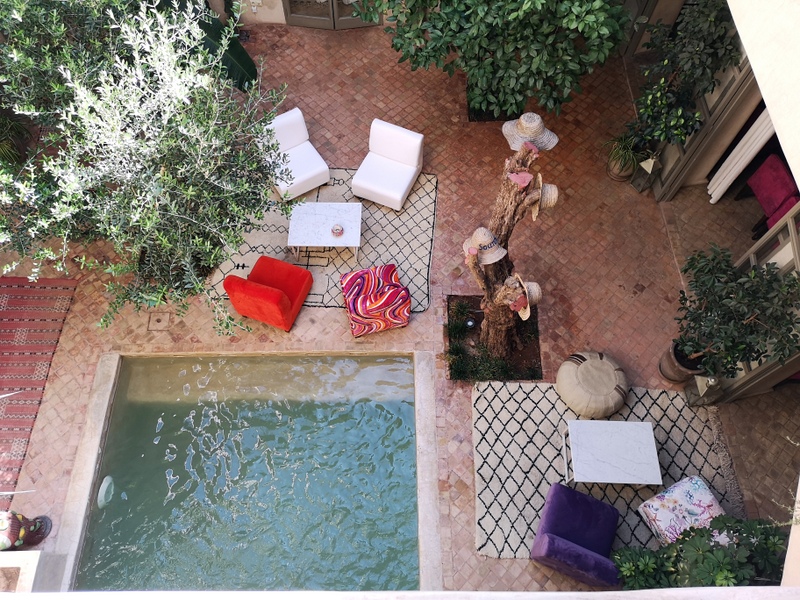
Yes, Riad Vendôme can be hired exclusively. The main riad has 12 rooms and goes up to 20 rooms with a partner riad 100 metres away, for exclusive hire of up to 50 guests. During an exclusive hire there are no other guests: the pool, hammam, jacuzzi and rooftop are reserved for your group alone.
How do I justify an overseas offsite to a finance director?
Answer the question they are actually asking, which is about exposure rather than merit. Give a single written all-inclusive quote from one contracted supplier, state what is included and excluded, and set out the cancellation and deferral terms. Add the alternatives you considered, including staying at home, and the specific reason each was set aside. One counterparty and one invoice remove most of the objection.
What is the strongest single argument for Marrakech over a European city?
The change of scenery, reached on a short-haul flight rather than a long-haul one. A European city is comfortable and familiar, which is exactly why it rarely breaks a team out of its office habits. Marrakech is different enough to reset the group, close enough to reach without losing days to travel, and a given budget buys a whole private venue rather than a block of rooms in a shared hotel.
What should I do about colleagues who cannot travel?
Establish who they are before the destination is fixed, not after. Reasons range from entry documents and caring commitments to medical and mobility needs. If the number is significant, an overseas offsite is the wrong format and it is better to say so early. If it is one or two people, agree with them how they take part and make sure the decisions taken reach them properly rather than as a summary.
How far ahead should I start the approval process?
Earlier than the trip feels, because two calendars have to line up. The budget decision often sits in a cycle that closes long before the dates, and the comfortable months in Marrakech are also the months group venues fill first. Start by holding provisional dates and getting a written quote, then take a complete proposal into the approval meeting rather than an idea that still needs pricing.
How do we stop the offsite being seen as a perk?
Let the programme carry the justification. Write the objective before choosing the venue, circulate the agenda internally rather than only to attendees, lead the communication with the working sessions, and publish what was decided to the people who did not go. Then apply the real test honestly: if the same days could have happened in a meeting room at home, the criticism is fair and framing will not fix it.
Does it matter where in Europe our offices are?
It matters more than total headcount. When a team travels from several offices, the destination is effectively chosen by the worst-connected one, so compare the longest journey rather than the average. Then decide whether the arrival day is a travel day or a working day and say which in the invitation, because a colleague landing late at night will not be usable in an early session the next morning.
When is an overseas offsite simply the wrong choice?
When there is no articulated objective, when the organisation is visibly reducing costs, when a meaningful share of the team cannot travel, when the dates cannot be protected against diary erosion, or when nobody internally has the time to own the logistics. Travel also intensifies whatever a group already is, so a team in active conflict is not repaired by moving it somewhere warmer.
Can I book a seminar in Marrakech for 2027?
Yes. Riad Vendôme takes seminar, incentive and team-building bookings for 2026 and for 2027. The riad is hired exclusively, 12 rooms and 36 guests, up to 50 with the partner riad 100 metres away. The busiest windows, March to May and October to December, are blocked several months ahead: for a spring 2027 seminar, ask for the quote now. Exact rate according to your dates and the number of delegates, answer within 24 hours.
⭐ Google 4.2/5 (617 reviews) · 🏠 Booking 8.3/10 · ✈️ TripAdvisor 4.2/5 · 🎉 500+ events organised since 2013
Seminar & Company
Corporate Retreat Marrakech ·Seminar Marrakech | Guide organisation | Team building | Incentive | Large Groups | Ultimate Guide
Exclusive Hire & Events
📈 Marrakech vs Paris, Barcelona, Lisbon: the full comparison
Price, climate, change of scenery: why Marrakech is the best seminar destination.
An alternative to large business hotel chains
Corporate teams increasingly look beyond standardised meeting rooms of large hotel chains. A 12-room riad fully privatised in the Dar El Bacha medina offers a radically different experience: intimate setting, real human contact with a small team, and the authenticity of a character venue rather than the anonymity of a business hotel. Since 2011, Riad Vendôme has hosted over 500 professional events for companies including BNP Paribas, Unilever (15 senior executives from 5 continents), AXA Paris, Nokia Networks and Andbank Monaco.