
 Français
  English
  Español
  Italiano
  Deutsch
  Nederlands
  Português
  Polski
  Norsk
Norsk  Svenska
  Dansk
Dansk 
Rental Management of a Boutique Riad in Marrakech
Rental management of a boutique riad in Marrakech by an owner-operator on site since 2011, with rooms marketed from €90 per night. Bookings, staff, maintenance and direct-booking strategy in one hand, so your riad is run the way you would run it yourself. One contact throughout: Éric, owner since 2011: WhatsApp +212 600 608 608, written quote within minutes.
In brief: Riad Rental Management Marrakech
- Professional rental management of a boutique riad in the Marrakech medina covers daily operations, guest communication, supplier relationships and regulatory compliance such as tourist tax, fire inspections and liquor licence renewal.
- Riad Vendôme does not offer third-party management services: Éric manages the property he has run since 2011, through two pandemic closures, several renovation phases and major changes in the medina tourism ecosystem.
- Owners living in the UK, France or Switzerland delegate to a resident manager with a clear reporting structure, combined with a direct-booking strategy that reduces dependence on OTAs and their margin erosion.
- Direct booking / WhatsApp: +212 600 608 608
Independent riad management in Marrakech? You don't need a property agency to find a manager. Our team currently manages several boutique hotels in Marrakech, including Riad Vendôme & Spa since 2011.
You are welcome to visit our site to learn about the services offered within the riad, and we are happy to show you around our guesthouse so you can see for yourself the professionalism of our teams.
The management mandate and the management lease contract have many similarities and shared interests. We wanted to make a quick comparison of these two methods of hotel business management.
1: Benefits of the Management Mandate and the Management Lease Contract
Contact Us +212600608608
- Entrust the management of the riad to an established hotel professional,
- Maintain and improve the riad's performance,
- Retain ownership of the hotel business (premises, licence and goodwill),
- Ensure financing for the property and/or renovation works, and bring the riad into regulatory compliance,

Find a Manager for Your Boutique Riad in Marrakech
Our team, established in Marrakech since 2011 in guesthouse and private venue management, can take charge of the rental management of your boutique hotel in Marrakech, Essaouira or Tanger.
We benefit from extensive knowledge and experience with local administrative authorities and culture to facilitate management and guarantee 100% rent payment, rental profitability and maintenance of your property.
Entrust the rental management of your boutique riad in Marrakech
As your trusted partner, we will set the monthly rent for your managed riad together, taking into account the various parameters of your property: riad location, number of rooms, facilities (hammam, pool, restaurant, etc.).
Marketing and operation of your riad
In our mutual interest, we commit to optimising your riad's management, property maintenance (repairs, upkeep, replacement of faulty equipment), enhancing your riad's online image (social media, TripAdvisor, classic rental, platforms, etc.), and administrative and financial management of your riad.
(Response to your enquiry within minutes)
Seasonal rental management in Marrakech
Depending on the characteristics of your riad under management, we will put a team in place: Manager, receptionist, kitchen team, housekeeping, night audit, in order to ensure the smooth running of your guesthouse throughout the year.
Contact us if you would like a partner to manage your riad
Leave us your contact details or a message on WhatsApp at 00 212 600 608 608 and we will get back to you to arrange a meeting to study together the management terms of your riad.
Guesthouse Management in Morocco
A guesthouse is a boutique hotel, often run with personalised services: room rental, with breakfast, spa or half board. Riads are located in the old towns, the Medina.
Moroccan regulations stipulate that riads must have 8, 10, 12, 14, 15, 20 rooms to be classified as a guesthouse under classic rental management in Marrakech.
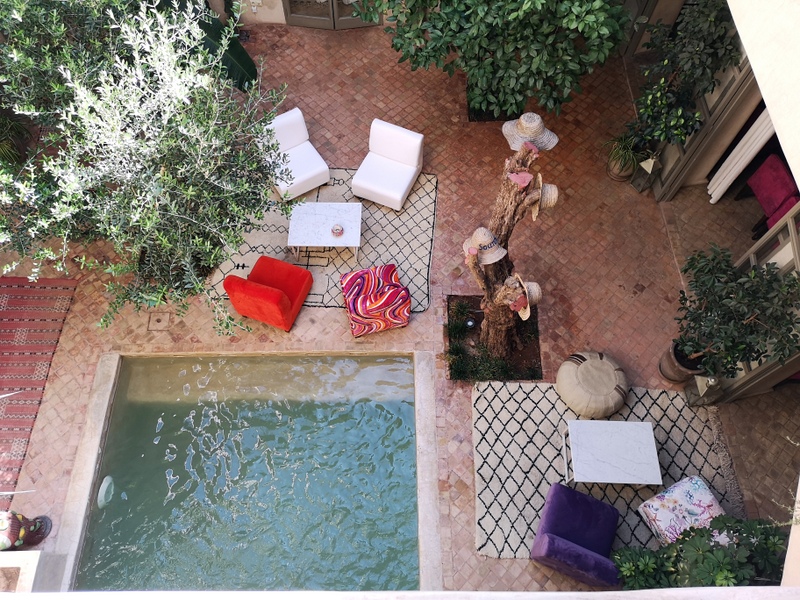
The guesthouses we manage are in the medina, built around an interior courtyard: the patio, around which the riad is organised, with living rooms, a covered winter patio and open summer one, a kitchen and bedrooms on the upper floors.
Riads are charming guesthouses, renovated to offer modern comfort while still able to present a contemporary or traditional Moroccan, beldi-chic style.
Many riads are run as guesthouses, either by individual owners or entrusted to tourism management professionals.



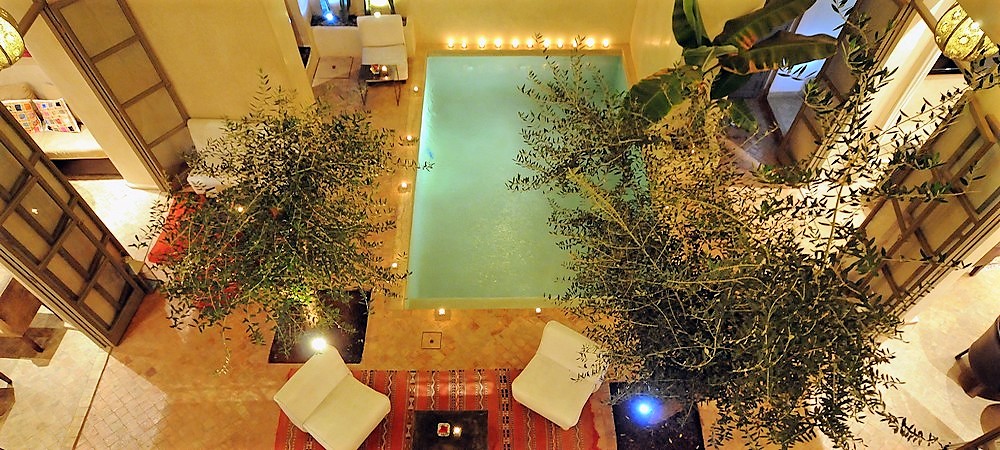
The Riad Vendôme is classified by the Moroccan Ministry of Tourism.
|
Weather in Marrakech
|
What Riad Rental Management Actually Involves
Owners who live outside Morocco face a specific challenge: how do you maintain the quality of a boutique hotel in the Marrakech medina when you're not on-site? The answer lies in a combination of trusted local management, clear operational systems, and a direct-booking strategy that reduces dependence on OTAs and their associated margin erosion.
Professional management of a boutique guesthouse in the medina covers: daily operations (cleaning, maintenance, staff scheduling), guest communication (bookings, arrival logistics, concierge requests), supplier relationships (food, linens, utilities, repairs) and regulatory compliance (tourist tax, fire inspections, liquor licence renewal). For owners based in the UK, France or Switzerland, delegating this entirely to a resident manager with a clear reporting structure is the only realistic path to a sustainable rental income.
Riad Vendôme does not offer third-party management services: Éric manages the property he owns, not others. But if you are exploring the Marrakech boutique hotel market as a buyer, Éric is happy to share his operational experience informally. He has been running the property since 2011 and has navigated two pandemic closures, multiple renovation phases and significant changes in the medina's tourism ecosystem. Contact via WhatsApp: +212 600 608 608.
⭐ Google 4.2/5 (617 reviews) · ✈️ TripAdvisor 4.2/5 · 🎉 500+ events organised since 2013
Three Routes an Owner Can Take, and How Each One Fails
Be honest about the three routes actually open to you. Each has a version that works and a version that quietly goes wrong.
- Run it yourself, living in Marrakech. Nobody cares about the house as you do, and guests feel it. You keep every decision and no margin goes elsewhere. It fails when the riad stops being a project and becomes a job you cannot leave: reception, buyer, mediator and night porter, with no week off duty.
- Run it remotely, with staff on site. The commonest arrangement and the most fragile. It works when someone on the ground has real authority and a reason to stay. It fails invisibly: standards drift, nobody wants to give bad news by telephone, small problems are held back until expensive. Distance does not degrade a riad; unclear authority does.
- Hand it to a manager. You buy back your time and stop being the escalation point. In exchange, someone else's judgement is applied to your house on days you are absent. It fails when the terms were never really agreed: nobody wrote down who decides what, what you see, and what happens if either side wants out.
None is right in the abstract. It depends on how much of your life the riad may occupy, how much control you want to keep, and whether you prefer the smaller outcome you can rely on or the larger one you must be present for. The operational detail of the third route sits on riad management in Marrakech; this page is about the decision and the relationship that follows.
What an Owner Is Actually Buying When They Delegate
You are buying time: the messages, quotes, supplier calls and small emergencies that look insignificant until added up. You are buying continuity: someone present in low season and on the evening the pump fails, who does not need you reachable to act. And you are buying an end to being the escalation point at midnight, which owners underestimate because it never appears as a cost until it has run for years. What you are not buying is certainty about money: anyone presenting delegation as a route to a particular financial outcome is telling you something they cannot know.
A test before signing: list the last ten things about the riad that interrupted your week. If a competent manager would have handled most of them without contacting you, delegation solves a real problem. If they would have telephoned you anyway, you are buying less than you think, and it is better said in the negotiation than discovered afterwards.
The Part That Is Harder Than the Commercial Case
A riad is rarely a pure asset. More often it is somebody's project, a house restored slowly, sometimes a family home that strangers now sleep in. Handing over control is harder than any spreadsheet suggests, and owners who pretend otherwise make the relationship difficult for everyone.
What owners find hardest to release is almost never large: the way the table is laid, who opens the door, whether the lanterns are lit before dusk, the tone of a reply sent late at night. Those parts carry the owner's own voice. So separate taste from operation, and be explicit about the first: a manager can be told in writing that the character of the public spaces, the food philosophy and the choice of craftsman remain yours.
Insist on keeping: the identity of the house, the standard you will not drop below, the right to be told bad news early, and the right to arrive unannounced. Be ready to release: rotas, supplier choices, individual guest replies, the ordering of the day. Owners who invert those lists are usually unhappy before long, and so is their manager.
What a Good Management Relationship Looks Like
A workable relationship is mostly decision rights written down before anyone needs them: not the commercial terms, which get all the attention, but the unglamorous architecture beneath them.
- Routine decisions belong to the manager. Pricing within an agreed frame, rotas, ordinary repairs, small gestures towards a guest. If you want to approve each one, you do not want a manager.
- A defined band where the manager acts first and tells you afterwards. Most friction lives here. It needs a written threshold both sides agreed to, not an assumption each remembers differently later.
- Things that never happen without your written approval. Structural or heritage work, changes to the fabric of the house, anything altering the riad's name or positioning, any commitment outlasting the mandate, and anything touching your own dates.
- A fixed rhythm for reporting and for talking. A report read alone is not a relationship; a conversation with no document behind it is not accountability.
The clearest indicator of health is how bad news travels. In a good relationship you hear about the cancelled group, the failed boiler and the departing chef from the manager, early. In a poor one you learn it from a review, an invoice, or a guest. Knowing where bookings come from also makes a serious conversation about how a riad night is priced possible instead of an argument.
Questions to Ask Before You Sign, and the Answers That Should Worry You
Ask these of anybody, us included. The point is less the answer than whether the person is comfortable being asked.
- Which properties do you manage now, and may I speak to those owners without you present? Hesitation here is the most informative signal in the conversation.
- Have you ever lost a mandate, and what happened? "Never" is not a good answer. Someone who can describe a relationship that ended is telling you the truth.
- Who, by name, will be on site, and what happens when that person leaves? You are engaging a team, not a brochure.
- What will you decide without me, and what will you never decide without me? Vagueness here becomes a vague contract, and vagueness resolves in the manager's favour once you are far away.
- How do you handle a month that goes badly, and when do you tell me? Listen for a process rather than an intention.
Answers that should worry you: any promise about what your riad will earn; refusal to put you in touch with existing owners; a proposal detailing revenue and barely mentioning responsibilities; reluctance to put decision limits in writing; and pressure to sign before you have taken independent advice. On anything touching tax, company structure, employment or property, speak to a qualified professional in Morocco rather than to your prospective manager.
Comparing Two Proposals That Are Not Built the Same Way
The hardest moment is usually two offers that cannot be compared because they rest on different principles: one fixed, one a share of what the house produces, one a hybrid. Put both into the same shape first. For each, write down who pays for what in every category, including those nobody raises unprompted: linen, consumables, small repairs, marketing, bank charges, the cost of the booking channels themselves. Then who carries the risk in a poor month; who decides on work to the building; how your own dates are treated; and what each side owes the other on the way out.
Then ask the question that separates them: under which proposal does the manager do well only when you do? That alignment outweighs any headline term. Finally, compare the people, not only the paper. Two structures can both be made to work; one agreed with someone who deflects uncomfortable questions cannot.
Your Own Stays in Your Own Riad
Almost every owner wants to keep using the house, and almost every manager says yes in the first meeting. The principle is never the problem. The problem is that it was agreed verbally, warmly, and is first tested by an enquiry for the dates you wanted. Settle it in writing at the start: how far ahead you declare dates and what happens when you want dates you did not declare; whether a room or the whole house is blocked; who looks after you while you are there; whether family staying without you count the same; and whether the manager may ever release dates that look unused.
Writing this down is not distrust. Your own stay is the one part of the arrangement where your interests and the manager's are structurally opposed, and an unwritten understanding will be remembered differently by each of you on precisely the day it matters.
The Clause You Will Read Last and Need Most
Owners negotiate hard over the commercial terms and skim the ending. It should be the other way round: the terms govern the good years, while the exit clause governs the only moment the relationship turns genuinely adversarial. What matters is not the length of notice, that is for you and your adviser, but what has to happen once either side gives it. Establish beforehand who owns the bookings already taken for dates after handover, and the deposits attached; who owns the guest list, reviews, social accounts, website and photographs; what becomes of the team, which needs qualified local professional advice rather than an assumption by either party; and what condition the house is returned in. A contract detailing the beginning and dismissing the end in one sentence tells you which the drafter expects to matter.
If you would rather talk this through with someone who has run a riad in the medina since 2011 than with someone selling you a mandate, Éric will have that conversation, including where you go on to choose somebody else. WhatsApp +212 600 608 608 or the contact page, written reply within minutes. None of it is legal, tax, accounting or financial advice, and none of it replaces a qualified professional in Morocco. More about Éric as an owner-operator.
Frequently Asked Questions
Is riad rental management compatible with long weekend short break optimization?
Yes. Riad rental management at Riad Vendôme optimises for short-stay weekend formats (2-3 night long weekends represent a growing booking segment in 2026). Contact us via WhatsApp +212 600 608 608 to discuss rental management.
What are the flexible riad rental management options?
Flexible rental management options at Riad Vendôme: short-stay optimization, booking platform management, revenue optimization for weekend formats. Contact us via WhatsApp +212 600 608 608 for tailored rental management.
What management options do you offer for riad owners?
At Riad Vendôme, three models: fixed-rent management lease, revenue-sharing partnership, or bespoke management. Each is tailored to your riad and investment goals. Contact Éric for a personalised proposal.
What is the typical return on a riad in Marrakech?
At Riad Vendôme, well-managed riads in the medina can yield 6-10% net annual return. Location, condition, and marketing quality are the key factors. Dar El Bacha and Mouassine are premium neighbourhoods.
Do you handle renovations and maintenance?
Yes, at Riad Vendôme, our team manages all maintenance, renovations, and day-to-day operations. We have trusted local craftsmen for tadelakt, zellige, plumbing, and electrical work.
How do you market the riad to attract guests?
At Riad Vendôme, we manage platforms, classic rental, TripAdvisor listings, SEO-optimised website pages, Google Ads, and social media. Our direct booking rate is over 40%, maximising your revenue.
Can I still use my riad for personal stays?
At Riad Vendôme, of course. We block your preferred dates in advance. Most owners keep 2-4 weeks per year for personal use, typically in low season to maximise rental income.
Where exactly is Riad Vendôme located in Marrakech?
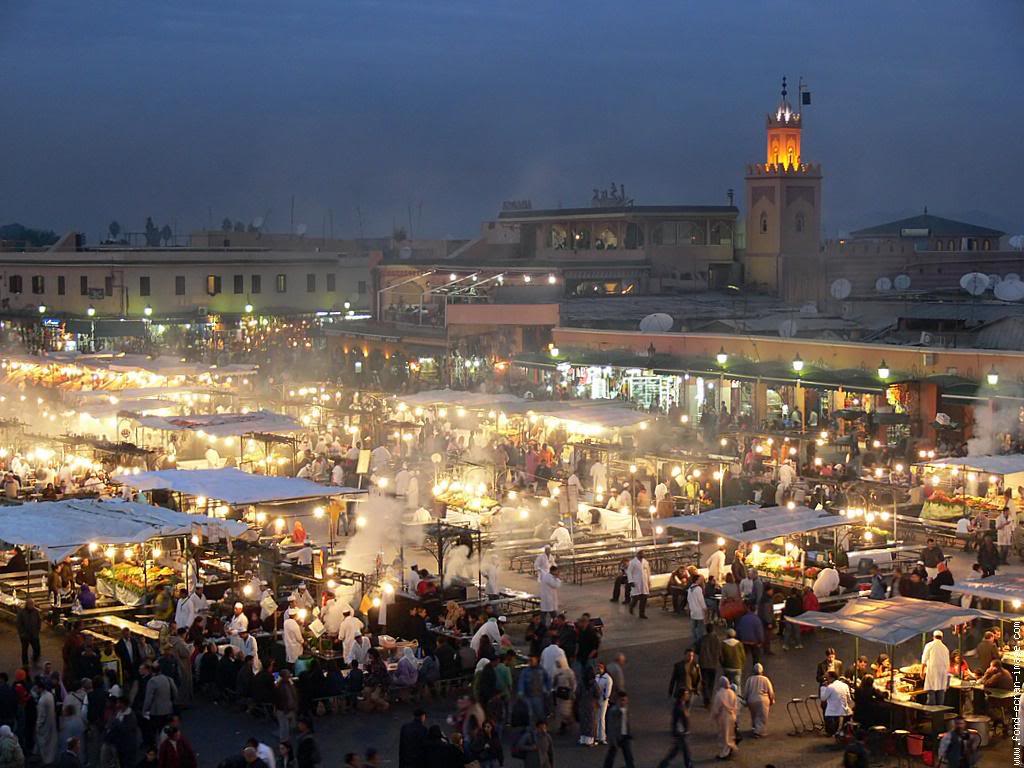
Riad Vendôme is at 217 Derb El Halfaoui, in the Dar El Bacha district of the Marrakech medina. It is a 7-minute walk from Jemaa El-Fna square, close to the Koutoubia and the souks, so you reach the main sights on foot without needing a taxi. A member of staff meets you at the nearest vehicle drop-off point on arrival.
How do I book, and how quickly do you reply?
You contract directly with the riad, not through an OTA or an aggregator: one single point of contact from the first enquiry to the invoice. Send your dates and group size on WhatsApp at +212 600 608 608, or go through our trade and management desk, and you receive a written quote, at our net rate, within minutes. There is no automated booking engine: every stay is confirmed by a person, and the payment terms are set out in the quote you receive.
Can the whole riad be privatised, and for how many guests?
Yes, Riad Vendôme can be hired exclusively. The main riad has 12 rooms and goes up to 20 rooms with a partner riad 100 metres away, for exclusive hire of up to 50 guests. During an exclusive hire there are no other guests: the pool, hammam, jacuzzi and rooftop are reserved for your group alone.
How do I decide between running the riad myself and handing it over?
Start with your life rather than the house. Running it yourself keeps every decision and every margin with you, but becomes a job you cannot step away from. Delegating buys time and continuity and costs you some control. Running it remotely sits between the two and is the most fragile unless someone on site has real authority.
What should never be decided without the owner's written approval?
Structural or heritage work, any change to the fabric or character of the house, anything altering the riad's name or positioning, any commitment that would outlast the mandate, and anything touching your own dates. The rest can reasonably sit with the manager, provided the boundary is written down in advance rather than assumed by both sides.
How do I compare two management proposals that are structured differently?
Rewrite both in the same shape before judging either. For each, list who pays for what in every category, who carries the risk in a poor month, who decides on building work, how your own dates are handled, and what each side owes the other on exit. Then ask under which proposal the manager does well only when you do.
What should I ask a manager about the owners they already work for?
Ask which properties they manage now and whether you may speak to those owners directly, without the manager present. Then ask whether they have ever lost a mandate and what happened. Hesitation on the first and a claim of never on the second deserve more attention than anything written in the proposal itself.
Why does the exit clause matter more than owners expect?
Because it governs the only moment the relationship turns adversarial. Establish beforehand who owns bookings already taken for dates after handover and the deposits attached, who owns the guest list, reviews, accounts, website and photographs, what condition the house is returned in, and how sums owed are settled. Anything concerning the team needs qualified local professional advice.
Should my own use of the house be written into the agreement?
Yes, at the start and in writing. Cover how far ahead you declare dates, what happens when you want dates you did not declare, whether a room or the whole house is blocked, how friends and family staying without you are treated, and whether the manager may ever release unused dates. It is the one point where your interests are structurally opposed.
Is it normal to find handing over control genuinely difficult?
It is close to universal, and worth taking seriously rather than talking yourself out of. What owners struggle to release is usually small and personal: the laid table, who opens the door, the tone of a late reply. Name those things explicitly as yours, then let the operational decisions go. Trying to hold both is what breaks the relationship.
Also explore: