
 Français
  English
  Español
  Italiano
  Deutsch
  Nederlands
  Português
  Polski
  Norsk
Norsk  Svenska
  Dansk
Dansk 
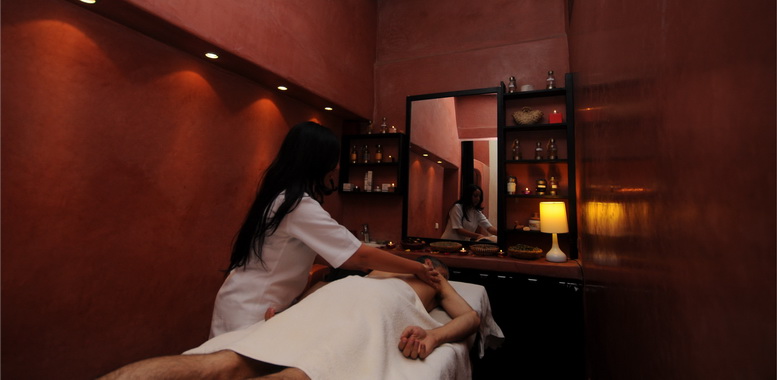
Hammam vs Sauna: 7 Key Differences & Benefits Explained
Published 18 February 2026 | Riad Vendôme & Spa Marrakech
The key difference: a hammam uses humid steam at around 40-50°C, while a sauna uses dry heat at 80-100°C. The hammam exfoliates and hydrates the skin; the sauna makes you sweat heavily for deep relaxation. Moroccan hammam or Finnish sauna? Both use heat to relax and purify, but their fundamental differences: temperature, humidity, rituals, benefits: mean one may be far better suited to your needs than the other. Here is an expert comparison to help you to choose.
In brief: Hammam vs sauna
- Hammam vs sauna: humid steam (~45°C) vs dry heat (~85°C), better for skin, detox & relaxation?
- Hammam: humid steam ~40-50°C, exfoliates and hydrates skin. Sauna: dry heat ~80-100°C, deep sweating and relaxation.
- Try a real Moroccan hammam at Riad Vendôme, Dar El Bacha medina, from €25.
- Direct booking / WhatsApp: +212 600 608 608
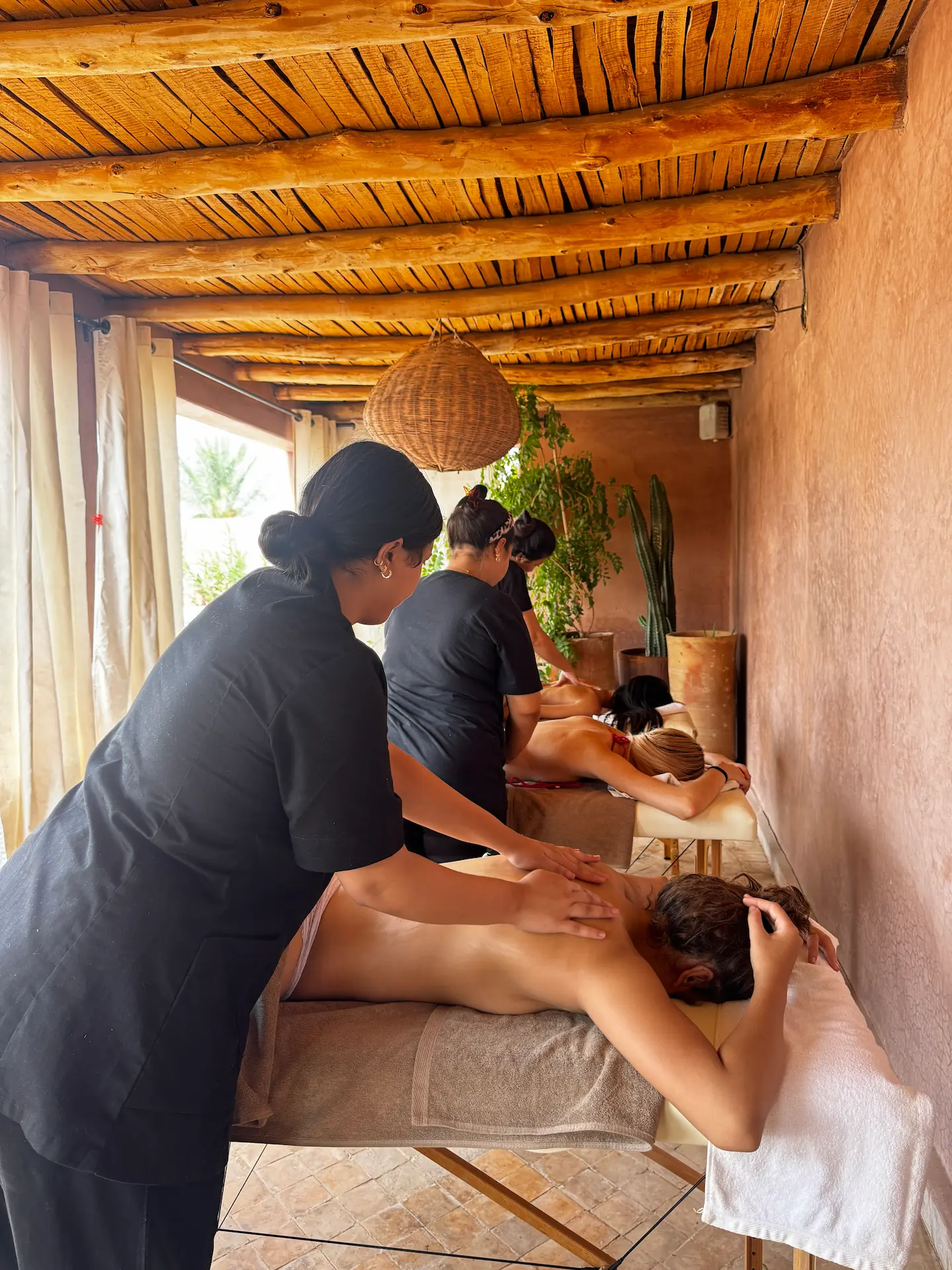
The Spa Vendôme is the in-house spa of Riad Vendôme, managed by the house.
Comparison Table: Hammam vs Sauna
Our verdict
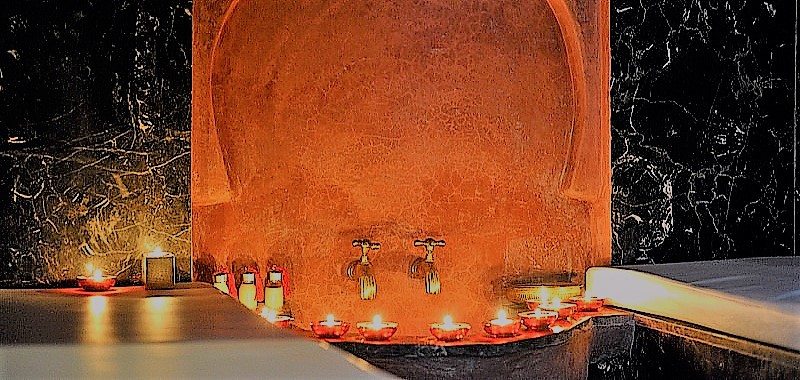
| Criterion | Moroccan Hammam | Finnish Sauna |
|---|---|---|
| Type of heat | Humid steam (90-100% humidity) | Dry heat (10-20% humidity) |
| Temperature | 40-50°C | 80-100°C |
| Session duration | 1hr30 to 2hr30 (complete ritual) | 15-20 min per session |
| Ritual | Steam + black soap scrub + rhassoul + massage | Dry heat + possibly birch |
| Human contact | Scrub by beautician | Solo or with friends |
| Skin benefits | Deep exfoliation + nourishment | Transpiration only |
| Tolerance | Very well tolerated (gentle heat) | Can be intense (strong heat) |
| Origin | Morocco / Arab world (1000+ years) | Finland / Scandinavia (2000+ years) |
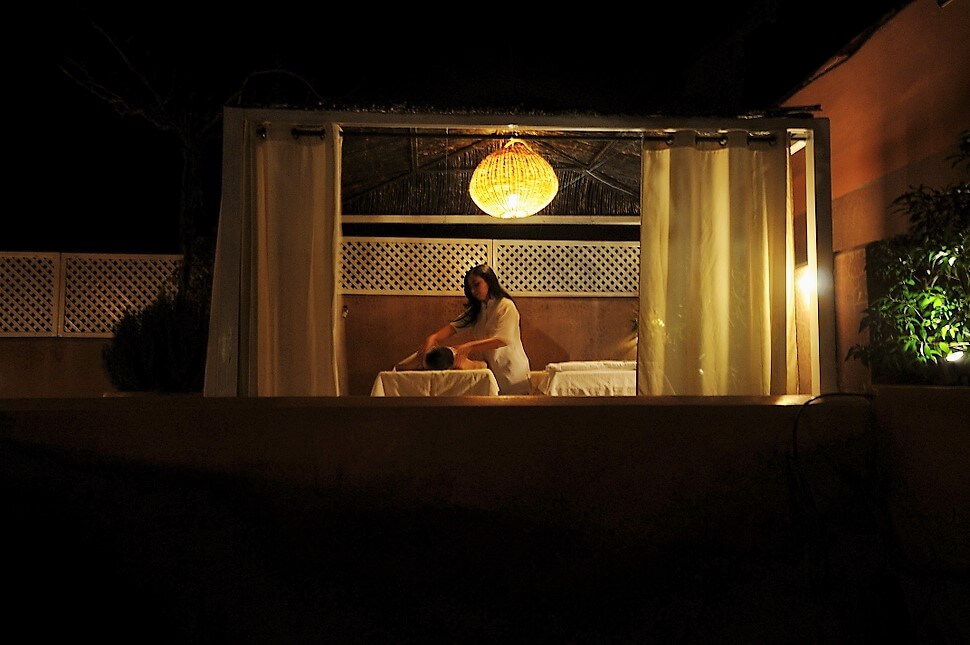
The Fundamental Difference: Humidity
The most important distinction between hammam and sauna lies in the type of heat. The hammam uses saturated water vapour at 40-50°C with 90-100% humidity. This moist heat envelops the body like a warm cocoon, opens pores gradually and keeps the skin hydrated throughout the session. The sauna works with dry heat at 80-100°C with only 10-20% humidity: twice as hot and much drier.
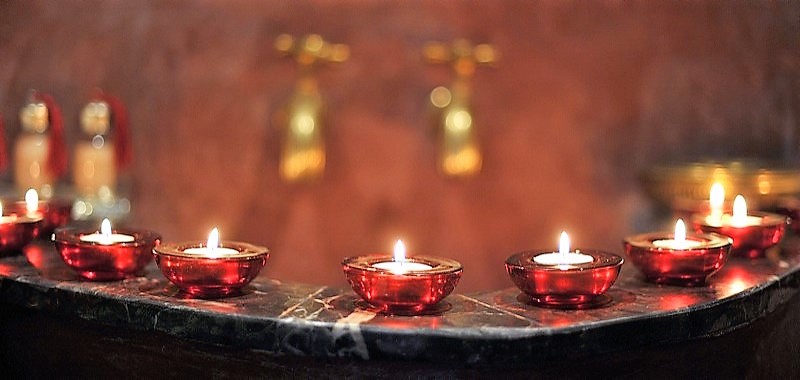
This difference has concrete consequences. Dry sauna heat can irritate the respiratory passages and dry out the skin of sensitive guests. The hammam's moist steam is much gentler: it hydrates the respiratory mucous membranes (beneficial for asthma and allergies) and preserves the skin's hydrolipidic film. This is why dermatologists often recommend the hammam over the sauna for sensitive or dry skin.
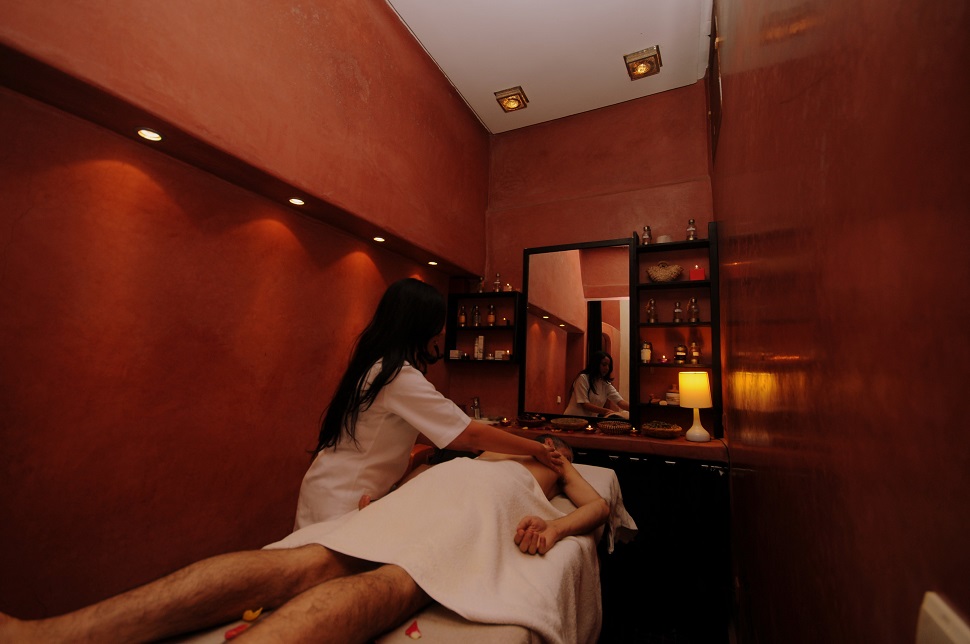
The Ritual: Where the Hammam Wins
The sauna is essentially a passive heat bath: sit, sweat, leave. Some Finnish traditions add birch branch flagellation, but the ritual remains minimal. The hammam, by contrast, is a multi-stage ceremony, steam, scrub, clay mask, massage, each step building on the last.
Compared Benefits in Detail
For the skin: advantage hammam. The mechanical kessa scrub removes 3 to 5 times more dead skin cells than a simple sauna session. Rhassoul remineralises the skin. Argan oil nourishes and protects. The sauna offers only perspiration.
For the detoxification: it's a draw. Both trigger heavy sweating that helps eliminate toxins. The sauna, with its higher temperature, can induce faster sweating, but the hammam makes up for it with a longer session.
For muscles and joints: advantage hammam. Moist heat penetrates tissues more deeply than dry heat. The massage integrated into the hammam ritual adds a muscular benefit the sauna cannot offer.
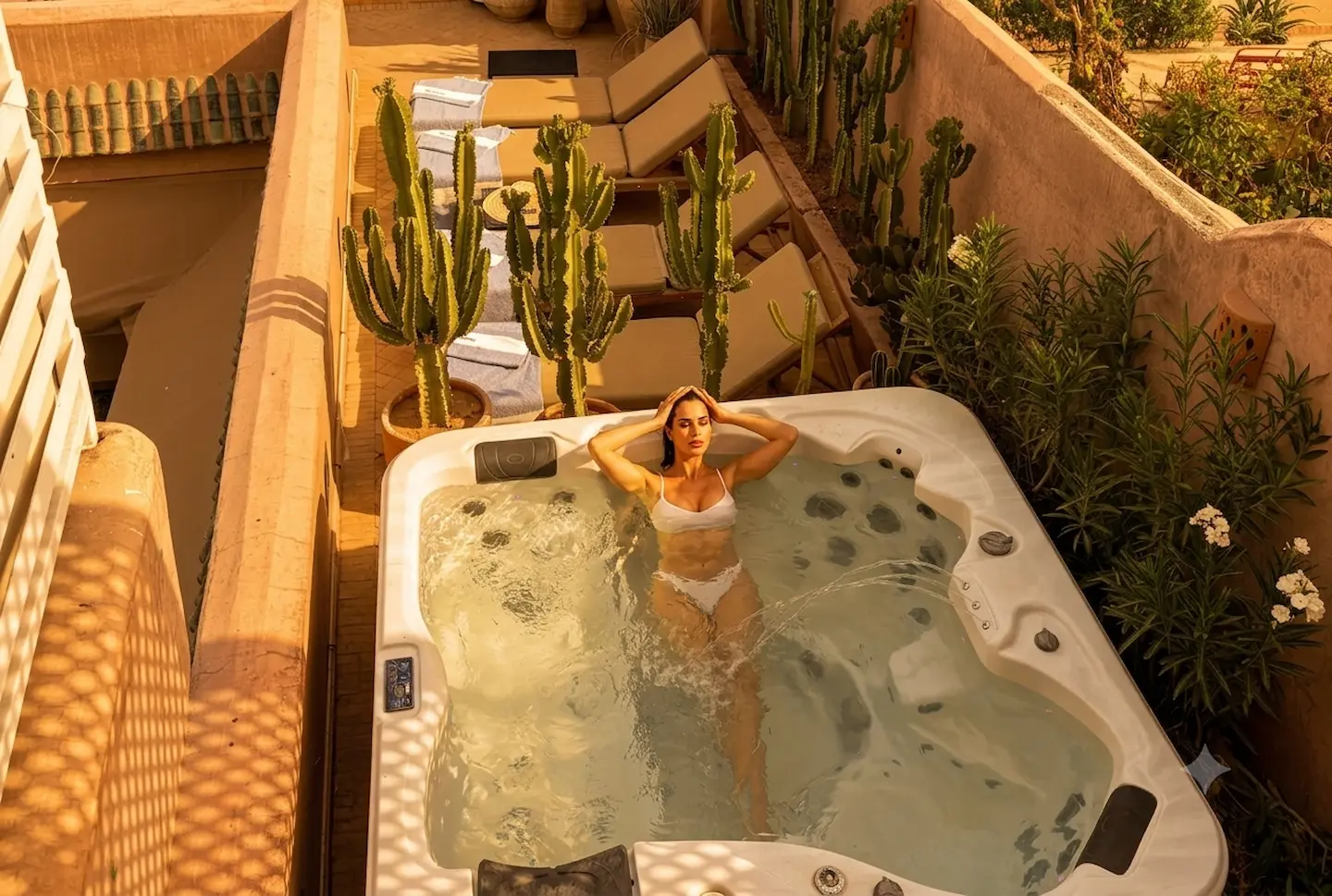
For the stress: advantage hammam. The human contact of the scrub, the longer duration of the ritual (1hr30-2hr30 vs 15-20 min), the scents of eucalyptus or orange, and the final mint tea create a multi-sensory experience that is incomparably more relaxing than a simple heat session.
For the cardiovascular system: advantage sauna. The sauna's higher temperatures stimulate the heart more and improve cardiovascular health: this is proven by several Finnish studies on populations who regularly practise sauna.
Our verdict
If you are looking for a complete beauty treatment and a rich cultural experience, choose the hammam. If you are looking for a cardiovascular workout through heat, the sauna is more suitable. Ideally, the two are complementary. But for a first experience or a stay in Marrakech, the traditional hammam is unmissable: it is an ancient ritual that you will not find anywhere as authentic as in Morocco.
Dry Heat and Wet Heat: What the Difference Actually Changes
Most people arrive at this comparison knowing one of the three rooms and none of the others, and the reading on the thermometer is the least interesting part of what separates them. What changes everything is what the air is carrying.
In a sauna the air is dry. Sweat leaves the skin almost as fast as the body produces it, which is why the room can feel bearable even when the heat is fierce, and why the skin can feel tight afterwards. The heat is radiant and direct: you feel it on the shins, the shoulders, the back of the neck, and it arrives quickly.
In a hammam or a steam room the air is already saturated. Sweat has nowhere to evaporate to, so it stays where it forms and mixes with the condensation settling on you from the walls. The heat feels heavier, closer and slower to build, and the skin stays soft rather than drying out. There is no clear moment when sweating begins, because you are damp from the second you walk in.
That single fact drives almost everything else. Dry heat is felt sharply, so a sauna is taken in short bursts with breaks between them. Wet heat builds slowly and never dries the skin, so a hammam can be inhabited for a much longer stretch without the same urgency to get out. The sauna is intense and brief; the hammam is mild and long. Neither is better in the abstract, they suit different appetites.
A useful shorthand: a sauna is something you enjoy in short doses; a hammam is somewhere you settle in. If you like a sharp, clean heat and a cold shock afterwards, the sauna is probably your room. If you would rather be enveloped and worked on for a long while, the hammam is.
The Social Dimension: Silence Versus Company
The difference that surprises visitors most is not the heat. It is the noise, or the absence of it. Finnish and Scandinavian sauna culture is quiet by convention: people sit, conversation is low and sparse if it happens at all, and there is a shared understanding that you are there to be left alone in company. Nobody touches you, and nobody speaks to you unless you speak first.
A traditional hammam is the opposite kind of room. In Moroccan neighbourhoods the public hammam has been a social institution for centuries: somewhere people go with family and friends, where conversation carries across the tiled chambers and news is exchanged. It is closer in spirit to a village square than to a quiet room.
Then there is the part that catches first-timers off guard entirely: in a hammam, someone else washes you. Not a therapist working at arm's length, but an attendant who scrubs you thoroughly, turns you over, and does it briskly and matter-of-factly. For visitors from a culture where being handled by a stranger is unusual, that is a far bigger adjustment than any temperature.
The flip side deserves saying plainly. If you go to a heat room specifically to be undisturbed, to think, to be silent, to be left alone, the hammam is not offering that, and the sauna is. That is a legitimate preference, not a failure of curiosity.
The Attendant and the Scrub: Why a Hammam Is an Active Process
In a sauna, nothing is done to you: you sit, the heat does the work, and you leave when you have had enough. A hammam is worked through, and there is a sequence to it.
- You are shown into the hot, steamy room and left to soften, the only genuinely passive part of the whole thing.
- Warm water is poured over you, traditionally from a bucket with a small scoop rather than from a shower.
- Black soap, savon beldi, an olive-based paste, is spread over the body and left to sit while the steam carries on working.
- The soap is rinsed away, and then the scrub itself: the attendant works over you with a coarse kessa glove, section by section, with real pressure.
- Rhassoul clay may be applied and rinsed, the hair is often washed, and a final rinse closes the sequence.
- You are wrapped, brought out to cool down, and given mint tea while the body settles.
The scrub is the part worth preparing for. It is firm. Most people find it satisfying rather than uncomfortable, but it is not a light exfoliation, and there is no expectation that you will do any of it yourself. Ask the attendant to ease off if you want to; a good one adjusts without fuss. Our guide to Moroccan black soap covers what is in the paste.
Duration and Rhythm: Stages Versus Cycles
A sauna is built on repetition. You go in, sit until the heat becomes too much, come out, cool down, a cold shower, a plunge, cold air, a bench outside, and then go back in if you want to. The cycle is the unit, and people repeat it as often as suits them. Much of the pleasure lies in the contrast between the hot phase and the cold, which is why serious sauna cultures build their rooms beside lakes and snow.
A hammam is built on progression. It moves through stages that do not repeat: soften, wash, scrub, mask, rinse, rest. You never return to the beginning, because each step depends on the one before: the soap has to sit before the glove comes out, and the scrub only works properly on skin the steam has already softened. Skipping a stage does not shorten the ritual so much as break it. A sauna session is a rhythm you set yourself and can stop at any point; a hammam is a sequence someone else is running, on their own timing.
What Each One Is Good For, and Who Tends to Prefer Which
The sauna suits people who like the heat itself, who want something short that fits around other plans, who value being alone with their thoughts, and who enjoy the shock of the cold afterwards. It is a habit more than an occasion. It also suits anyone who would simply rather not be touched by a stranger, which is a more common preference than the wellness industry tends to admit.
The steam room suits people who find dry heat harsh but do not want the full ritual. It is the middle option, and often the right one: wet heat, no attendant, no scrub, come and go as you please.
The hammam suits people who want an occasion rather than a facility, something with a beginning, a middle and an end, run by somebody else. It suits groups, since it is a shared thing by nature, and it suits anyone curious about the culture of the place, because in Morocco the hammam is not a borrowed spa concept but an ordinary part of the week. It also suits people who dislike fierce dry heat, since it is the gentler room to sit in.
Your First Time: What to Expect, and the Etiquette
In a sauna, the conventions are about restraint. Sit on a towel rather than directly on the wood. Keep conversation quiet, or skip it. Do not stay in past the point where you stop feeling comfortable: going out and coming back is expected, not a sign of weakness. Whether swimwear is worn varies enormously by country and by venue, so look at what everyone else is doing, or ask at the desk.
In a hammam, the conventions are about going along with the process. Disposable or your own underwear is normally worn; full nudity is not usual where an attendant is present. Bring or hire a towel and something for wet floors. Expect to be moved, turned and rinsed without much warning, brisk rather than rough. Say so if the pressure is too much, avoid a heavy meal beforehand, drink water afterwards, and leave yourself time to sit and cool down. The rest at the end is part of the ritual, not an afterthought.
The public hammam and the private one. A neighbourhood hammam is inexpensive, busy and completely authentic, and you generally bring your own soap and glove. A hammam inside a riad or spa is a private version of the same sequence, with the products supplied and one group in the room. Details of the version here are on our traditional hammam page, with rates on the hammam prices page.
A plain note on health. Heat treatments of any kind are not suitable for everybody. If you are pregnant, or you have a heart, circulatory, respiratory or skin condition, or you take medication that affects how your body handles heat, please take your own doctor's advice before booking a hammam, a sauna or a steam room. What we describe here is tradition and sensory experience, not medical guidance, and the decision belongs to you and your own practitioner.
Turkish Bath Versus Moroccan Hammam
The two are often treated as the same thing, and they are genuinely related: both descend from the Roman bathhouse, and both are called hammam in Arabic. The differences are still worth knowing before you book one expecting the other.
- The room. A Turkish bath is built around a large heated marble slab, the navel stone, in the middle of a domed chamber. A Moroccan hammam is usually a series of smaller rooms of increasing heat, with benches around the walls rather than a central platform.
- The heat. The Turkish version tends to be steamier and more theatrical. The Moroccan version is often more moderate than visitors expect, closer to a very warm room than to a steam cabinet.
- The soap. The clearest difference of all. A Turkish bath is known for its foam wash, clouds of lather worked over the body from a cloth bag. A Moroccan hammam uses savon beldi, the dark olive paste, spread on and left to sit rather than whipped up.
- The scrub. Both scrub, with a coarse mitt. The Turkish kese and the Moroccan kessa do the same job under different names.
- What follows. A Turkish bath commonly ends with the foam wash and a rinse. A Moroccan sequence more often carries on into rhassoul clay, argan oil and, in a spa setting, a massage.
If you have had a Turkish bath and enjoyed it, you will recognise most of a Moroccan hammam. What you will notice is the absence of the foam, the presence of the clay, and a sequence that continues well after the scrub is done.
Choosing Between Them on a Trip Where You Could Do Either
If you have room for only one, take the hammam: not because it is superior, but because you can find a sauna at home and you probably cannot find this. The hammam here is the local form of an everyday institution, carried out by people who grew up with it. Treat it as part of seeing the place, in the same category as the food and the souks rather than as a spa booking.
If you have several days and want both, the spacing matters more than the order. Do not stack heavy heat sessions back to back in one afternoon, and give yourself an unhurried evening afterwards rather than a dinner reservation you have to run for.
Timing within the day is worth a thought too. In summer, the hottest part of the afternoon is when nobody wants to be outside anyway, which makes it the natural slot; in winter, late afternoon works nicely, with the warmth carrying into the evening. For a group, a private hammam takes longer than people expect once everyone has been through the sequence. Our spa packages and spa pages set out what can sensibly be combined in one visit.
One last honest note. If you dislike being touched, dislike being wet, or dislike not controlling the pace, you will very likely prefer the sauna, and there is nothing wrong with that. A comparison that concluded otherwise would not be much use to you.
Frequently Asked Questions
Is the hammam gentler than a sauna?
Yes, the hammam is a lot milder. Its temperature (40-50°C) is half that of a sauna (80-100°C), and the humid steam is better tolerated by the skin and the respiratory airways. The hammam is recommended for guests sensitive to heat.
Can you do a hammam and a sauna the same day?
It is possible but not recommended for beginners. The combination represents significant thermal stress. If you wish to combine them, start with the hammam (milder) then the sauna (more intense), with a 30-minute rest between the two.
Which is best for losing weight: hammam or sauna?
Neither will make you really lose weight. Immediate weight loss is due to perspiration (water) and is recovered by drinking. However, both improve circulation and metabolism. The hammam has the additional advantage of reducing cellulite appearance thanks to the scrub and massage.
How long does a full hammam ritual last compared to a sauna session?
A complete hammam ritual lasts 1 hour 30 minutes to 2 hours 30 minutes, covering the steam, black soap scrub, rhassoul clay mask and massage. A sauna session, by contrast, lasts only 15 to 20 minutes of dry heat. The longer hammam format is one reason it is considered more relaxing for the stress response.
Which is better for the skin, a hammam or a sauna?
The hammam has a clear advantage for the skin. Its mechanical kessa scrub removes 3 to 5 times more dead skin cells than a sauna session, the rhassoul clay remineralises the skin, and argan oil nourishes and protects it afterward. A sauna, by comparison, offers only perspiration with no exfoliation or nourishing step.
Is a sauna better than a hammam for heart health?
Yes, when it comes to cardiovascular health the sauna has the advantage. Its higher temperatures of 80 to 100 degrees Celsius stimulate the heart more and improve cardiovascular health, a benefit proven by several Finnish studies on populations who regularly practise sauna. The hammam does not offer this same cardiovascular training effect.
Where do the hammam and sauna traditions originally come from?
The hammam originates in Morocco and the wider Arab world, where it has been practised for more than 1000 years. The sauna originates in Finland and Scandinavia, with a tradition going back more than 2000 years. Both use heat to relax and purify the body, but their rituals developed independently in very different climates.
How do I book, and how quickly do you reply?
You book directly with the riad, not through a platform. Send your dates and group size on WhatsApp at +212 600 608 608 and you receive a written quote within minutes. There is no automated booking engine: every stay is confirmed by a person, and the payment terms are set out in the quote you receive.
Can the whole riad be privatised, and for how many guests?
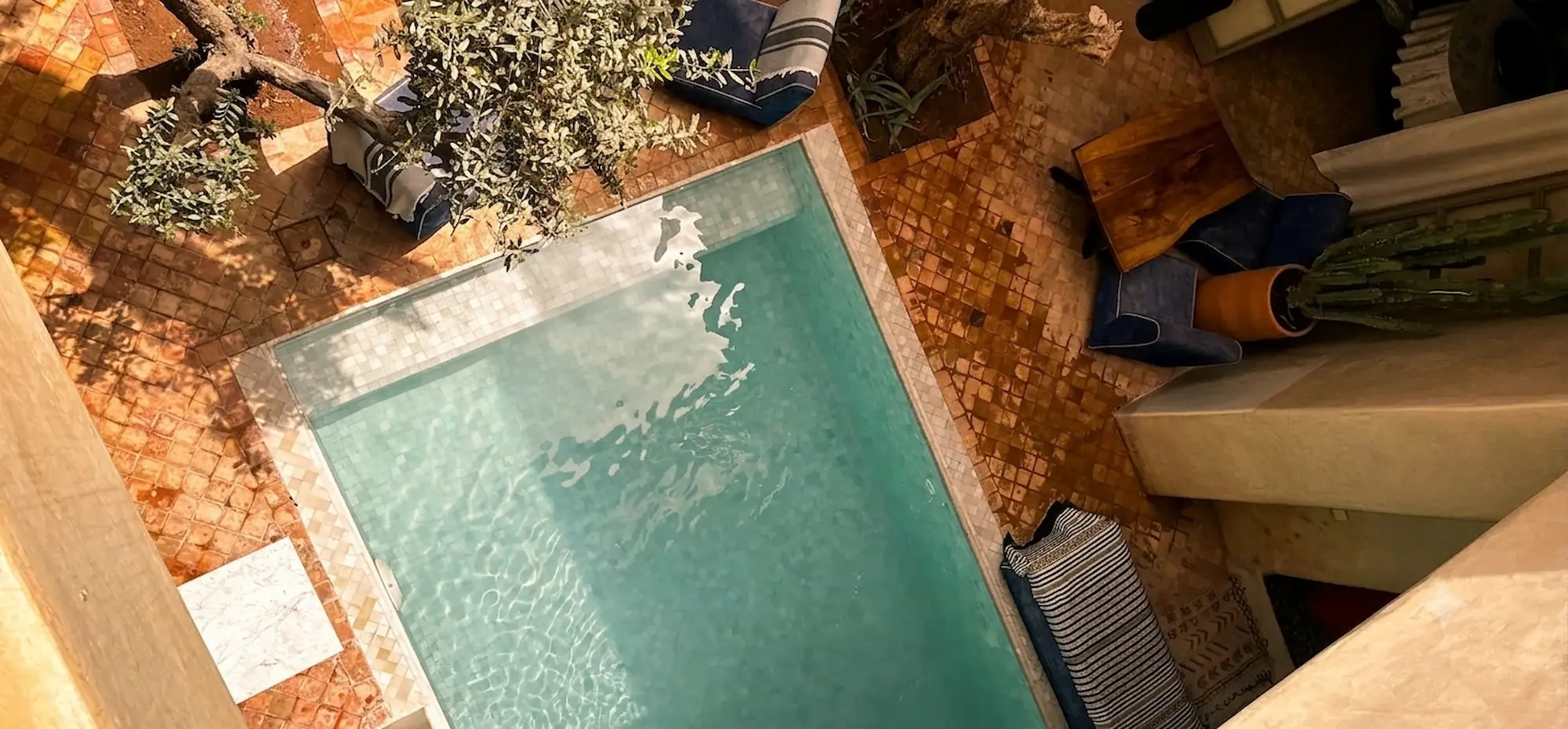
Yes, Riad Vendôme can be hired exclusively. The main riad has 12 rooms and goes up to 20 rooms with a partner riad 100 metres away, for exclusive hire of up to 50 guests. During an exclusive hire there are no other guests: the pool, hammam, jacuzzi and rooftop are reserved for your group alone.
What is the difference between a steam room and a hammam?
A steam room is a facility: a wet, heated room you enter and leave as you please, with nobody attending you. A hammam uses the same kind of moist heat, but it is a sequence rather than a room: softening in the steam, a black soap wash, a scrub by an attendant, a clay mask and a rest afterwards. The steam room is where a hammam begins, not the whole of it.
Do I have to be naked in a hammam?
Not where an attendant is present. Disposable underwear or your own swimwear bottoms are normally worn, and the attendant works around them. In a public neighbourhood hammam, men and women bathe in separate sections or at separate times, and the same convention applies. If you are unsure what a particular place expects, ask when you book rather than on arrival.
Is a Turkish bath the same thing as a Moroccan hammam?
They are related but not identical. A Turkish bath centres on a large heated marble slab in a domed chamber and is known for its foam wash. A Moroccan hammam usually runs through a series of smaller rooms and uses savon beldi, a dark olive paste that is spread on and left to sit rather than lathered. Both scrub with a coarse mitt.
Should I choose a public hammam or a private one in a riad?
A public neighbourhood hammam is inexpensive, busy and completely authentic, and you generally bring your own soap and glove. A hammam in a riad or spa runs the same sequence privately, with products supplied and one group in the room. Choose the public one for the atmosphere and the local reality, and the private one if you would rather not share the room on a first visit.
Is there anything I need to do myself during a hammam?
Very little. The attendant pours the water, applies the soap, scrubs, rinses and wraps you. Your part is to lie or sit where you are asked, turn when prompted, and say something if the pressure is firmer than you want. That passivity is the main thing separating a hammam from a sauna, where the whole session is yours to manage from start to finish.
Who should avoid a hammam, a sauna or a steam room?
Heat treatments are not suitable for everyone. If you are pregnant, or you have a heart, circulatory, respiratory or skin condition, or you take medication that affects how your body copes with heat, please ask your own doctor before booking. We can describe what happens during a session, but the decision about whether it suits you belongs with you and your own practitioner.
If I only have time for one in Marrakech, which should I pick?
The hammam, on grounds of rarity rather than superiority. A sauna is available almost anywhere, whereas the hammam here is the local form of an everyday institution, run by people who grew up with it. Treat it as part of seeing the city, alongside the food and the souks, and leave yourself an unhurried evening afterwards rather than a booking to run for.
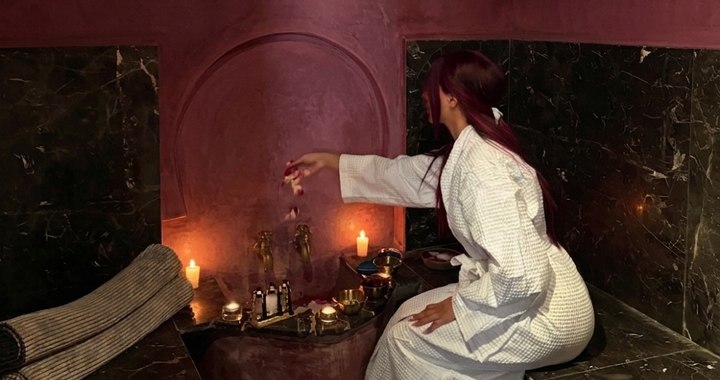
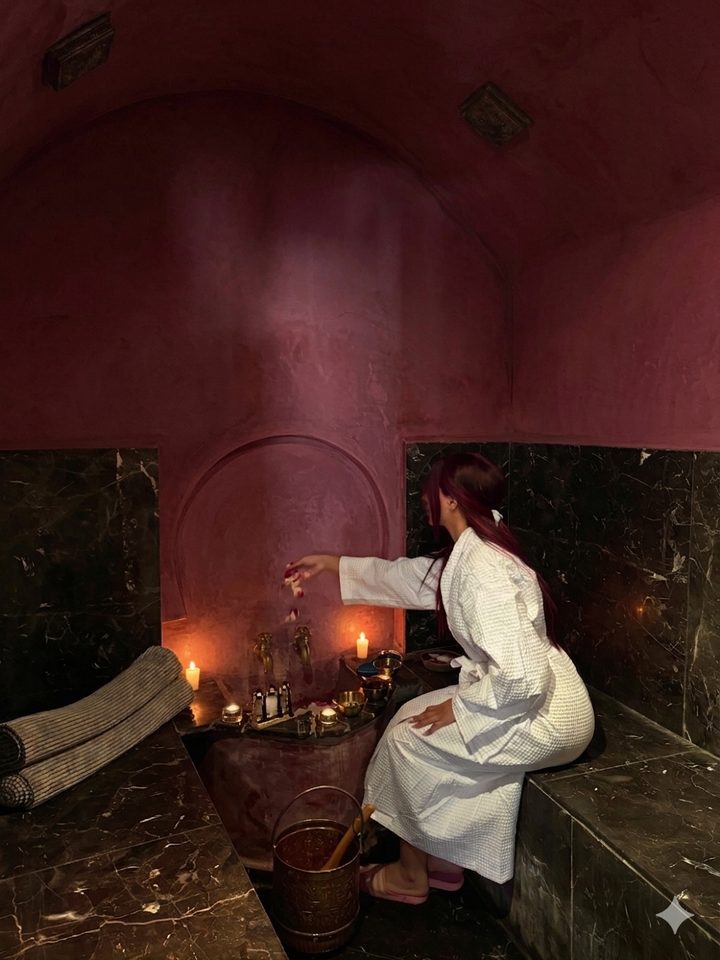
The Physiology Behind Moist Heat vs Dry Heat
The core physiological difference comes down to the relationship between temperature and humidity. A Finnish sauna operates at 80-100°C with relative humidity below 20%. At these conditions, sweat evaporates immediately, keeping the skin surface cool despite the extreme ambient temperature. The body can sustain this for 10-20 minutes before the cardiovascular load becomes significant.
A Moroccan steam bath operates at a much lower temperature (40-55°C) but at 80-100% relative humidity. Sweat cannot evaporate, so the perceived heat is much more intense at lower ambient temperature. The skin stays moist, which allows the subsequent scrub (kessa glove + savon beldi) to work far more effectively: softened dead cells are removed cleanly rather than requiring abrasion against dry skin. The ghassoul mask that follows draws out residual impurities through negative ion exchange, a mineral-based process that dry heat cannot replicate.
For skin and lymphatic benefits, the Moroccan steam bath protocol has measurable advantages over the dry sauna. For cardiovascular conditioning and immune stimulation, the extreme temperature contrast of the Finnish tradition (steam room followed by cold plunge) is more potent. The ideal wellness routine, if you have access to both, alternates between them. At Riad Vendôme, the jacuzzi at 36°C provides a moderate thermal contrast after the steam bath session.
⭐ Google 4.2/5 (617 reviews) · ✈️ TripAdvisor 4.2/5 · 🎉 500+ events organised since 2013
The Riad Vendôme is classified by the Moroccan Ministry of Tourism.
Related: Spa Day Marrakech.