
 Français
  English
  Español
  Italiano
  Deutsch
  Nederlands
  Português
  Polski
  Norsk
Norsk  Svenska
  Dansk
Dansk 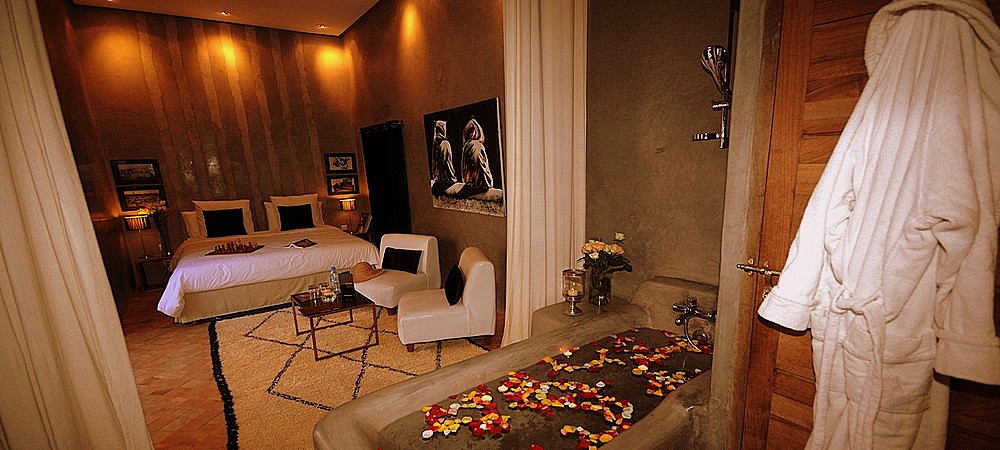
Destination Wedding in Marrakech: Your Intimate Celebration in a Private Riad
Destination wedding in Marrakech: the Riad Vendôme welcomes intimate weddings (20, 25, 30, 35, 40, 50 guests) in a setting of the 18th century. Ceremony in the patio or on the rooftop Atlas view. Traiteur Moroccan, sound system (your playlist), floral decoration. Éric coordinates local suppliers. Wedding budget riad: from €5,000 for 30 guests.
Marrakech has become one of the top destination wedding locations in the world, and for good reason. A private riad in the medina offers an intimate, magical setting that no European venue can match. At Riad Vendôme, your wedding of 15, 20, 25, 30, 35, 40 guests takes place entirely within your privatized riad: rooftop ceremony at sunset, candlelit dinner by the pool, and a party that lasts all night.
In brief: Destination wedding in Marrakech
- Riad Vendôme welcomes intimate weddings (20, 25, 30, 35, 40, 50 guests) in an 18th-century setting.
- Wedding budget riad: from €5,000 for 30 guests.
- Ceremony in the patio or on the rooftop with Atlas view. Moroccan caterer, sound system (your playlist), floral decoration. Éric coordinates local suppliers.
- Direct booking / WhatsApp: +212 600 608 608
Why Marrakech for your wedding?
Book your event +212600608608
Marrakech offers an unbeatable combination: exotic beauty, year-round sunshine, and prices 2-3x lower than Europe. A 3-hour flight from Paris, London, or Madrid. Direct flights from most European cities. No visa required for EU, UK, US, or Canadian citizens. And above all: a private riad where all your guests stay together under one roof: something almost impossible to find in Europe at this price point.
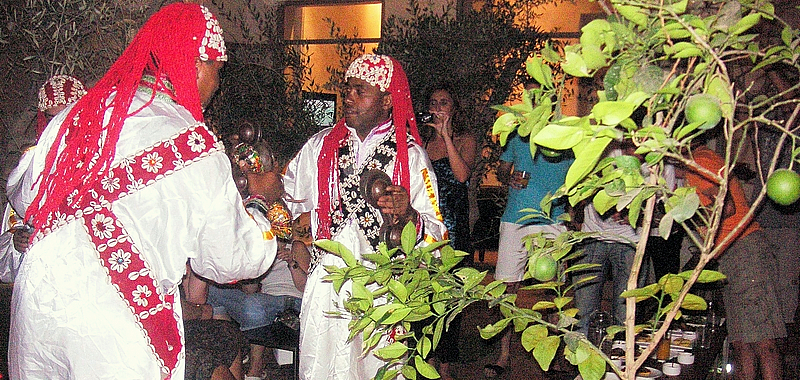
Your wedding at Riad Vendôme
Riad Vendôme offers 12 rooms (20 with annex) in the prestigious Dar El Bacha district. Éric, the French owner, manages your entire wedding organization: ceremony, dinner, music, decoration, photography, bridal spa, and transfers. One point of contact for everything.
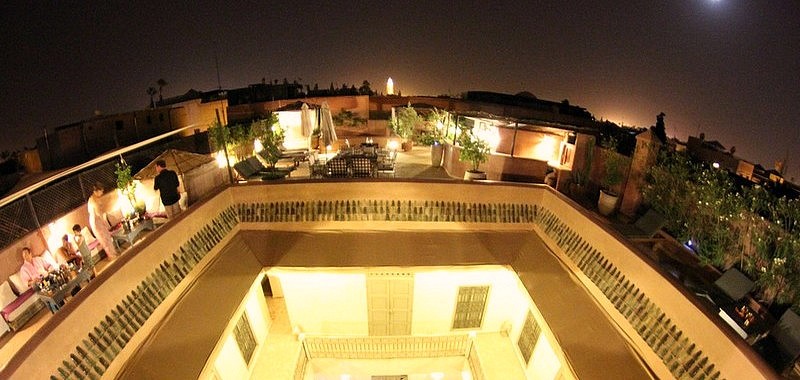
Ceremony - Rooftop at sunset, with views of the Koutoubia mosque and Atlas mountains. Symbolic or religious ceremony with an officiant recommended by Éric.
Dinner: Candlelit gala dinner around the illuminated pool. Moroccan gastronomy: mechoui, pastilla, couscous royal, wedding cake.
Party - Gnaoua musicians (traditional Moroccan music, UNESCO-listed), oriental dancer, sound system (your custom playlist). Rooftop party with full bar until dawn.
Budget guide (30 guests, minimum 3 nights)
| Item | Estimated cost |
|---|---|
| Riad private hire (3 nights min) | €3,360 |
| Gala dinner + welcome dinner | €2,500 |
| Music (your playlist) | €500 |
| Decoration | €400 |
| Photographer | €400 |
| Bridal spa | €250 |
| Sunday brunch | €450 |
| Transfers | €300 |
| TOTAL | €7,400 |
Low-season rates, conditions apply. Please enquire.
Rates updated August 2026.
Explore our wedding packages or contact Éric at +212600608608 (WhatsApp, English spoken).
Marrakech for a Destination Wedding
Marrakech has become one of Europe's most popular destination wedding locations for three simple reasons: it is 3.5 hours from London (less than Italy or Greece), it is 40-60% cheaper than equivalent venues in Tuscany, Santorini or the Algarve, and the settings, ancient medinas, private riads, Atlas mountain backdrops, are genuinely unlike anything in Europe.
The city has hosted destination weddings for over 20 years, which means the infrastructure is mature: experienced photographers, reliable caterers, English-speaking florists, and venues that have done it hundreds of times. Unlike newer destinations, there are no logistics surprises.
Riad Vendôme - A Destination Wedding Venue That Works
For intimate weddings of 20-60 guests, Riad Vendôme offers something most large wedding venues cannot: complete privacy and flexibility. The entire property is yours for the duration of your stay. There are no other guests, no hotel schedules to follow, no shared spaces. Your 12-20 closest people sleep on-site in 12 en-suite rooms. Everyone wakes up together on your wedding morning.
Éric, the French owner who has lived in Marrakech since 2007, handles the local coordination personally: from the marriage paperwork and florist to the rooftop music and airport transfers. One contact. One WhatsApp. Everything organised.
Budget Guide - Destination Wedding in Marrakech
An all-inclusive destination wedding weekend at Riad Vendôme for 20 guests (Friday-Sunday, 2 nights accommodation, ceremony, dinner reception, sound system (your playlist)) starts from €6,500 total, €325 per guest. Compare this with equivalent venues in Tuscany (€15,000+) or Santorini (€18,000+).
For a wedding of more than 50 guests, we also arrange a private estate with pool and garden 10 km from Marrakech, for 50 to 60 guests (on request). Up to 50 guests, your wedding takes place in the fully privatised riad.
Deciding to marry abroad: what you gain, and what it honestly costs
A destination wedding gives you something a wedding at home almost never does, and that thing is time. Instead of a few compressed hours in a hired room, with people leaving early because they are driving, you get days in one place with the people you love most. The setting does much of the work, and because the guest list is naturally smaller, the celebration feels like yours rather than a family obligation discharged in public.
The honest cost is that some people will not be there. Not everyone can take the leave, afford the flights, or travel comfortably. Elderly relatives, friends with very small children, people between jobs: those are the absences that hurt, and they are the price of the format rather than a problem you can plan your way out of.
The conversation, in the right order: Decide privately who you would be genuinely sad to lose. Speak to those people individually, before any announcement, and ask honestly whether the trip is possible for them. Then decide. Announcing first and discovering afterwards who cannot come is the order that causes real hurt, because by then nobody can say no without appearing to spoil something.
Family who feel excluded usually feel excluded by the manner of the telling rather than by the distance. Couples who handle it well give warning rather than notice, and offer relatives who cannot travel something of their own: a gathering at home before or after, or a visit that is just for them. What does not work is treating an invitation abroad as a test of loyalty.
The guest list changes shape when guests have to travel
Asking people to fund flights and accommodation changes the guest list more profoundly than any decision about the venue. At home, invitations are generous because attending costs an afternoon and a taxi. Abroad, every invitation is a request for money and annual leave. Some you assumed would come will decline with real regret; others you barely dared invite will treat it as the holiday they were taking anyway.
The result is a list weighted towards people who genuinely wanted to be there, and that is the main advantage of the format rather than a consolation prize. Obligation invitations tend to filter themselves out without anyone being excluded. Two things follow. Invite expecting a good number of refusals, and never build a plan that collapses if several people drop out late. And be explicit from the beginning about what you pay for and what guests pay themselves: ambiguity about money causes far more resentment than the money itself.
Why a smaller wedding abroad usually works better than a large one
Every guest who flies adds a small stream of logistics: a flight to track, a transfer to arrange, a room to allocate, a question to answer. At home those streams are absorbed by the guests; abroad they converge on you. A large destination wedding is therefore not a bigger version of a small one but a heavier undertaking, and the couple feel it on the day.
A smaller group also unlocks what most couples say they wanted afterwards: a real conversation with everyone present. At a large wedding you greet people; at a small one you talk to them. A group small enough to sleep under one roof behaves differently again: breakfast becomes part of the celebration, the evening does not end in a fleet of taxis, and nobody navigates an unfamiliar city alone. That is the logic behind an intimate wedding and behind exclusive hire of a whole property rather than a block of rooms in a larger hotel.
The case for several days rather than a single day
Guests who have flown will not thank you for a single evening. Once someone has bought a ticket and taken leave, the extra cost of staying longer is small and the return disproportionate. A celebration spread over several days lets the group arrive, meet, relax and then celebrate, rather than landing, changing and performing on the same afternoon.
The usual shape is a relaxed welcome while people are still arriving, the main day, and a slow final morning for goodbyes. The welcome does more work than couples expect, because it introduces both sides of the family before the day that matters. The unhurried last morning matters just as much, since otherwise farewells happen in a car park at an inconvenient hour.
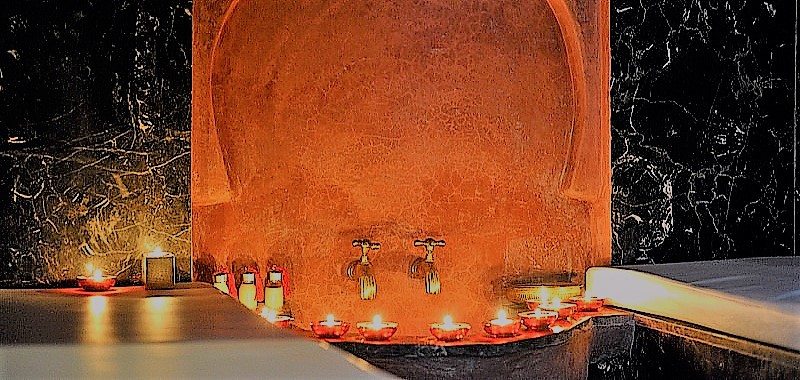
Leave gaps in the programme. The commonest error in multi-day weddings is scheduling every hour of them. Guests have paid to be somewhere they may never see again and need unstructured time to sleep, swim, wander, visit a spa and hammam or do nothing at all. Offer optional things and make it genuinely comfortable to skip them.
Planning remotely: what travels well, and what needs a visit
More can be settled at a distance than couples expect: the season and dates, the venue, the shape of the days, the style of food, the music, the order of events, who sleeps where. All of it can be agreed on video calls and in writing, provided the venue is honest with photographs and willing to show you the spaces on camera rather than only in a brochure.
What genuinely benefits from being there is easy to underestimate: the quality of light at the hour you intend to marry, how sound behaves in an open courtyard, whether a space that photographs beautifully is comfortable to sit in all evening. Above all, a visit lets you meet the person who will run your day. If you can only travel once, go late enough that the decisions are real and early enough that you can still change your mind.
Working with people you have not met rests on unglamorous habits. Keep one conversation thread so there is a single record. Confirm every agreement in writing, in your own words, and ask them to correct you if you have misunderstood. Ask to see photographs of what has been done before rather than descriptions of what could be. Ask what happens if it rains, or if numbers change. And notice how your questions are answered before you commit: clarity and reply times during planning are the best guide to how the week itself will feel. Dealing with an owner directly rather than a chain of intermediaries matters more at a distance than it does at home.
A realistic order of planning, described in sequence
Timelines given in fixed months mislead, because everything depends on how far people must travel and how quickly your group decides. The sequence, though, is remarkably consistent.
- Settle the season and a rough window first, before any venue conversation, because season constrains everything after it.
- Choose and secure the venue, since venue and date are inseparable.
- Tell your guests as soon as the date is fixed, before the details exist, they are booking leave and flights, not reading a programme.
- Decide the shape of the days: welcome, main day, farewell, and what is optional.
- Settle food and music, which shape an evening more than any decoration.
- Handle the legal question in parallel and early, taking proper advice where you live.
- Only then move to details: flowers, styling, photography, and what you will wear in the climate you have chosen.
- Confirm final numbers, rooming, arrival times and transfers once flights are actually booked, not merely intended.
- In the final stretch, send guests practical information, confirm arrangements in writing, and agree a wet-weather and hot-weather plan with the venue.
- Arrive before your guests. Whatever is unresolved is easier to resolve in person and unhurried.
Season and weather are a constraint, not a detail
In Marrakech, season is not decided after the venue; it decides what kind of wedding is comfortable. High summer is genuinely hot, and heat is a guest problem rather than a photography problem: it affects what you can wear, when you can be outdoors, how long a ceremony can last, and how older guests cope. Weddings in the hottest part of the year work when the daytime stays in shade or water and the celebration moves outdoors as the day cools.
Spring and autumn are most sought after because the days are kind and the evenings pleasant outdoors, which also means those windows fill earliest. Winter days can be bright and beautiful, but evenings turn cool once the sun goes down, so an outdoor dinner needs heating, blankets and a warning to guests who packed for a summer holiday. Rain is uncommon rather than impossible, and every outdoor plan needs a fallback you have actually seen.
Season affects guests as much as it affects the day: school holidays determine who can travel and what flights cost. Read up on when to visit Marrakech before fixing anything, and check how your guests will actually get there from the places they live.
What to tell guests, and when
A destination wedding asks more of guests than a wedding at home, so information must arrive earlier and be clearer. The first message needs only the date and the city, and should go out as soon as those are certain. What guests are deciding at that moment is whether they can take the leave and afford the trip, and they cannot begin without a date.
The second message prevents most misunderstandings. It should say plainly what the days will look like, what is included and what guests pay for themselves, where to stay and how to book, and the point by which they must decide. Put it somewhere they can return to, because a stream of messages across different chats guarantees that half the group has half the information.
Closer to the time, guests need practical detail: the airport and how to get from it, what to wear for heat, cool evenings and uneven old streets, and what to bring. Nominate someone who is not the couple to answer questions in the final days: on a wedding weekend abroad, the couple should not be the switchboard. A short list of things to do helps guests plan their own free time instead of waiting to be entertained.
What most often goes wrong with weddings abroad
The failures repeat themselves, and almost none of them are exotic.
- Announcing the destination before speaking privately to the people whose absence would hurt.
- Being vague about cost, so guests discover the real figure after they have said yes.
- Scheduling every hour, leaving guests no time to enjoy the place they paid to reach.
- Having no serious plan for weather, heat as much as rain.
- Leaving the final morning unplanned, so it ends in a scatter of taxis rather than a proper goodbye.
- Trying to reproduce a wedding at home in another country, importing the cost and rigidity of both.
- Agreeing everything verbally, then discovering that two people remember it differently.
- Leaving the legal question until late, when it should have been settled at the start.
- The couple acting as tour guide, translator and complaints desk all week, and arriving at their own wedding exhausted.
The last is the most common and the easiest to avoid. Decide in advance which parts of the week you are hosting and which parts guests are responsible for, then hold that line kindly. Grown adults on holiday can find their own lunch.
The legal side: take proper advice
The legal formalities of marrying abroad depend entirely on the couple's nationality and country of residence, and are not the same for any two couples. For that reason many couples handle the legal marriage at home and hold the celebration abroad with their guests. That separation is common and takes nothing away from the day itself.
This is not a question to settle from a wedding page. Whatever you decide, take proper advice from the relevant authorities for your own nationality and place of residence, and do it early rather than late. No venue, planner or website can tell you what applies to your particular situation, and treating general information as though it applied to you is where couples get into difficulty.
With that settled, the rest is what this page has described: a place, a date, people who chose to come, and enough time together to make the journey worth it. Our wedding budget guide and the wedding in Marrakech page cover the practical side, and many couples stay on for a honeymoon once the guests have gone home.
Frequently Asked Questions
How much does a destination wedding for 25-30 guests cost?
For 25, 30 guests (3 days/2 nights): €7,000-12,000 total (excluding guest flights). This includes venue, catering, music, decoration, and photography.
Do I need a visa to get married in Morocco?
No visa needed for EU, UK, US, or Canadian citizens (stays under 90 days). Valid passport required. Civil marriage must be done in your home country: Riad Vendôme hosts symbolic or religious ceremonies.
⭐
A destination wedding in Marrakech at Riad Vendôme starts from €3,500 for 15 guests (3 days/2 nights all-inclusive). This covers exclusive riad hire, full board, wedding ceremony on the rooftop, and one team activity.How much does a destination wedding in Marrakech cost?
Why Marrakech for a Destination Wedding?
Marrakech has become one of Europe's most popular destination wedding locations for three simple reasons: it is 3.5 hours from London (less than Italy or Greece), it is 40-60% cheaper than equivalent venues in Tuscany, Santorini or the Algarve, and the settings, ancient medinas, private riads, Atlas mountain backdrops, are genuinely unlike anything in Europe. The city has hosted destination weddings for over 20 years, which means the infrastructure is mature: experienced photographers, reliable caterers, English-speaking florists, and venues that have done it hundreds of times. Unlike newer destinations, there are no logistics surprises.
The Riad Vendôme is classified by the Moroccan Ministry of Tourism.
See also: Wedding in a Riad · hen party in Marrakech · Birthday in Marrakech · Spa & Hammam
Can foreign couples organise a destination wedding at Riad Vendôme without speaking Arabic?
Yes - Riad Vendôme welcomes destination weddings for foreign couples and Éric speaks French, English, Italian and some Spanish. Éric (owner since 2011) personally coordinates with vendors and translates for couples. For legal weddings, Moroccan civil ceremony requires specific paperwork (translated documents, residence permit, etc.): most foreign couples opt for a symbolic ceremony at Riad Vendôme + legal ceremony in their home country. We provide a multilingual celebrant, photographer who speaks English, and detailed pre-arrival logistics. Reply within minutes on WhatsApp, and a detailed quote within 24 hours.
What is the most flexible destination wedding option at Riad Vendôme?
The most flexible destination wedding option is the 4-night intimate package for 15-25 guests: arrival Wednesday, welcome dinner Thursday, ceremony + gala Friday, free day Saturday (spa, excursions, leisure), brunch + departures Sunday. This gives guests time to enjoy Marrakech beyond the wedding day. Riad Vendôme handles transfers, hammam reservations, cooking classes, and excursions for guests in parallel, each guest can follow their own programme. Once confirmed, a group booking or an exclusive hire can no longer be cancelled; the deposit is kept.
How do guests travel to Marrakech from the US and Canada?
There are no non-stop flights from the United States; from New York allow about 8 to 9 hours via Casablanca on Royal Air Maroc, which hubs there. From Canada, Royal Air Maroc operates a seasonal non-stop from Montreal to Casablanca, then a short connection to Marrakech. Most North American couples ask guests to allow a travel day on each side.
Where exactly is Riad Vendôme located in Marrakech?
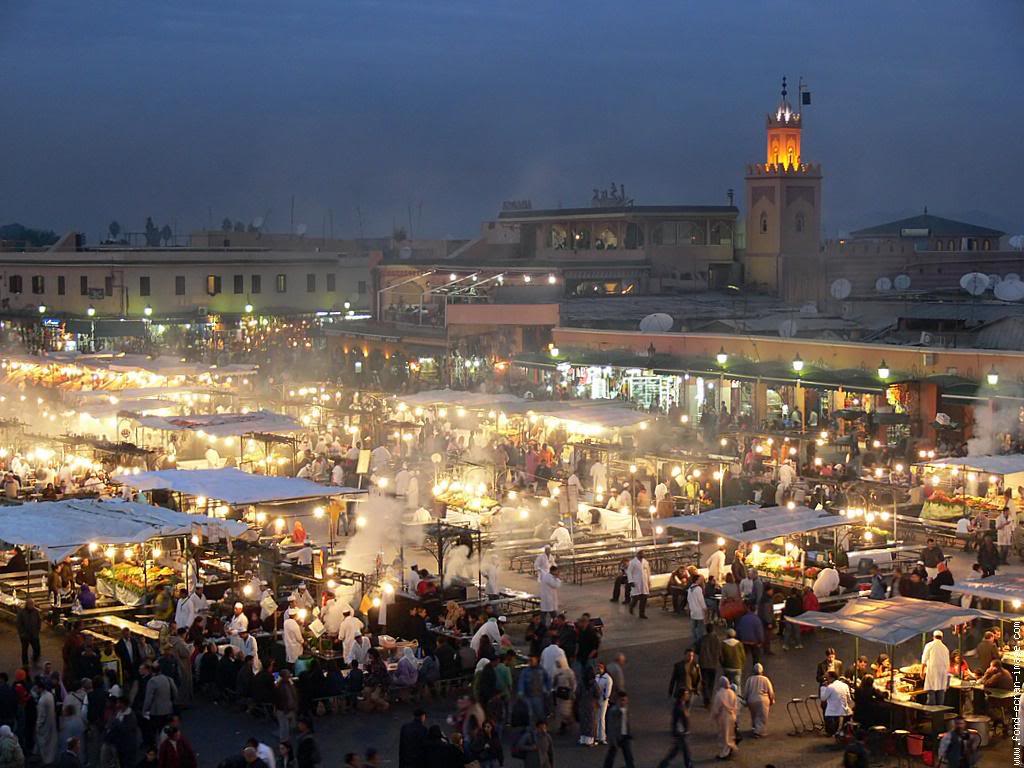
Riad Vendôme is at 217 Derb El Halfaoui, in the Dar El Bacha district of the Marrakech medina. It is a 7-minute walk from Jemaa El-Fna square, close to the Koutoubia and the souks, so you reach the main sights on foot without needing a taxi. A member of staff meets you at the nearest vehicle drop-off point on arrival.
How do I book, and how quickly do you reply?
You book directly with the riad, not through a platform. Send your dates and group size on WhatsApp at +212 600 608 608 and you receive a first reply within minutes on WhatsApp, and a detailed quote within 24 hours. There is no automated booking engine: every stay is confirmed by a person, and the payment terms are set out in the quote you receive.
Can the whole riad be privatised, and for how many guests?
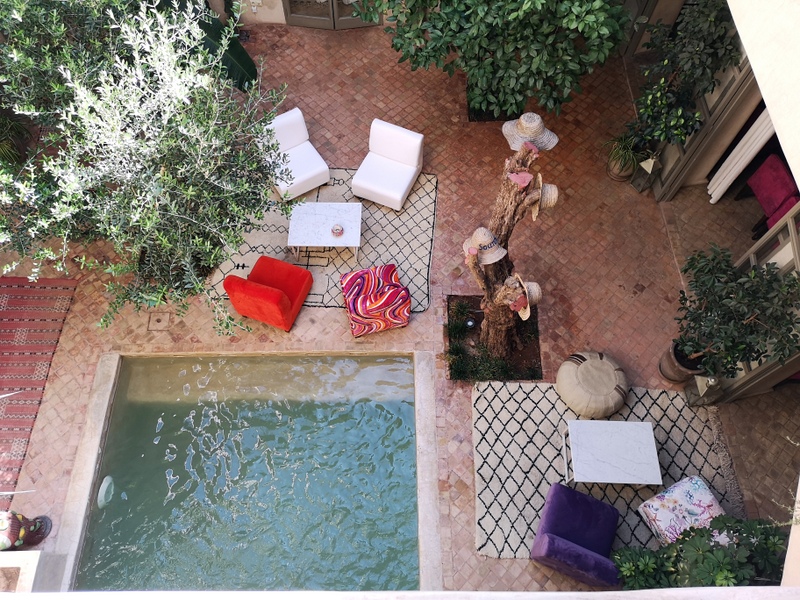
Yes, Riad Vendôme can be hired exclusively. The main riad has 12 rooms and goes up to 20 rooms with a partner riad 100 metres away, for exclusive hire of up to 50 guests. During an exclusive hire there are no other guests: the pool, hammam, jacuzzi and rooftop are reserved for your group alone.
Is it unfair to ask guests to pay to travel to our wedding?
It is a fair thing to ask, provided you ask it openly and early. Guests can accept almost any arrangement when they are told about it in good time. What causes resentment is discovering the real cost after committing. Say plainly what is included and what guests pay themselves, give the date long before the details, and accept every refusal without making it awkward.
How do we tell family who cannot afford to come?
Speak to them privately, before any public announcement, and ask honestly whether the trip is possible. Give warning rather than notice, explain your reasoning rather than defending it, and offer them something of their own: a gathering at home before or after, or a visit that is just for them. The hurt usually comes from the manner of the telling, not from the distance.
Why do smaller weddings abroad tend to work better than large ones?
Every guest who flies adds logistics that converge on the couple rather than on the guest. A large destination wedding is not a bigger version of a small one, it is a heavier undertaking. A group small enough to stay under one roof also behaves differently: breakfast becomes part of the celebration, evenings do not end in taxis, and you talk to people instead of merely greeting them.
How much can we genuinely organise without visiting first?
More than most couples expect. Dates, venue, the shape of the days, the style of food, music, the order of events and who sleeps where can all be settled on video calls and in writing. Harder to judge remotely are light at the hour you plan to marry, how sound carries outdoors, and whether a beautiful space is comfortable to sit in all evening.
When should we tell guests, compared with a wedding at home?
Earlier, and in stages. Send the date and the city as soon as they are certain, before any details exist, because guests are deciding about leave and flights rather than about the programme. Follow with a single page setting out the shape of the days, what is included, where to stay and by when they must decide. Practical travel detail comes last.
Does the season really change the planning that much?
Yes, and it should be decided before the venue. Heat affects what guests can wear, how long an outdoor ceremony is comfortable and how older guests cope. Cooler months are lovely by day but need heating and blankets for an outdoor dinner. The mildest windows are the most sought after, so they close earliest. Every outdoor plan needs a fallback you have actually seen.
What about the legal formalities of getting married abroad?
They depend entirely on your nationality and country of residence, and they differ from couple to couple. Many couples handle the legal marriage at home and hold the celebration abroad with their guests. Whatever you choose, take proper advice from the relevant authorities for your own situation, and do it early. No venue or website can tell you what applies to you.
Can I book a wedding or a vow renewal for 2027?
Yes. Dates for 2027 are open and the busiest months, April to June and September to October, are booked a year ahead. The riad is hired exclusively, 12 rooms and 36 guests, up to 50 with the partner riad. Note that Easter falls on 28 March in 2027, eight days earlier than in 2026, which pulls the whole spring season forward by a week.