
|
|
| | Book | | | ✉ Contact | | | +212 600 608 608 |
 Français
  English
  Español
  Italiano
  Deutsch
  Nederlands
  Português
  Polski
  Norsk
Norsk  Svenska
  Dansk
Dansk 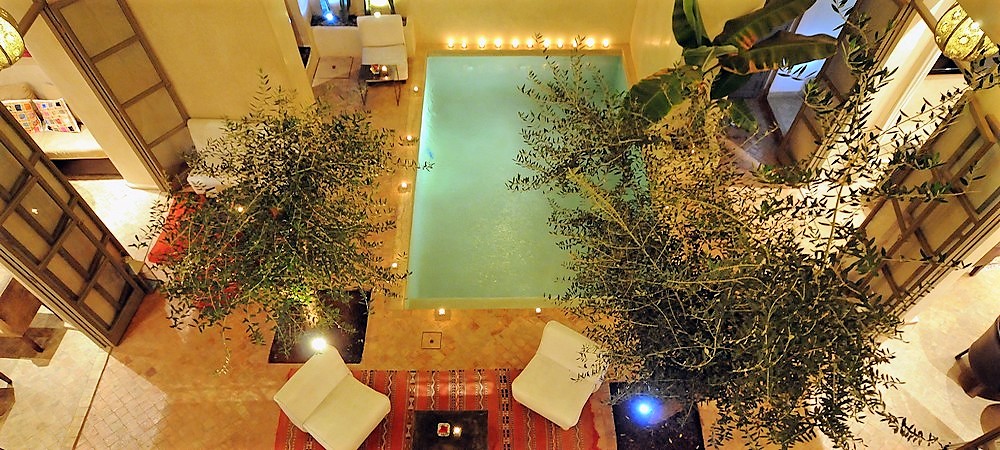
Discover Marrakech: Plan Your Trip, Itineraries & Travel Guide
Planning a trip to Marrakech? It comes down to four questions, what to see, what to do, where to stay and how many days. This guide answers each, gives ready-made 1, 2 and 3-day itineraries, and tells you when to visit. As a rule, 3 days are enough for the medina on foot, 4 to 5 days with an excursion. The best base to do it all on foot is the medina, in Dar El Bacha, where Riad Vendôme is located.
In brief: Planning a Marrakech trip
- Three days are enough to cover the essentials of the Marrakech medina on foot, while four to five days leave room for an excursion such as Agafay, the Atlas Mountains or the Ourika valley.
- The guide covers Jemaa El-Fna, the souks, Ben Youssef Madrasa, the Koutoubia, Bahia Palace, the Saadian Tombs and Jardin Majorelle, all walkable from Dar El Bacha, where Riad Vendôme is located.
- Spring from March to May and autumn from September to November offer the mildest weather for sightseeing on foot; winter stays sunny and mild, while summer is hot and best spent by the pool and spa.
- Direct booking / WhatsApp: +212 600 608 608
Deciding where to base yourself changes how much of this you can do on foot: see where to stay in Marrakech, and quiet riad in Marrakech if you want the evenings calm.
What to See, What to Do, Where to Stay
Plan your Marrakech sightseeing: + 212 600 608 608
(WhatsApp reply within minutes)
(Reply to your enquiry within minutes)
What to see. The must-see monuments, Jemaa El-Fna, the souks, Ben Youssef Madrasa, Koutoubia, Bahia Palace, the Saadian Tombs and Jardin Majorelle, with walking distances, are covered in our what to see in Marrakech guide.
What to do. For experiences and activities, cooking classes, spa and hammam, quad biking, hot-air balloon, see things to do in Marrakech, plus the Day Pass open to non-residents.
Excursions. Day trips and multi-day desert tours (Agafay, Ourika, Atlas, Merzouga) are detailed on our excursions from Marrakech page. If you are arriving in the north, the 7-day Fez to Marrakech desert tour crosses the country from Fès to Marrakech via Merzouga and ends with two nights at the riad.
Where to stay. To visit everything on foot, the medina, and Dar El Bacha in particular, is the best base: see where to stay in the medina.
How Many Days in Marrakech? Itineraries for 1, 2 and 3 Days
See our full Marrakech itinerary hub. Detailed day-by-day plans: weekend itinerary, 3-day itinerary, 4-day itinerary and 5-day itinerary.
One day. Morning in the souks and the Ben Youssef Madrasa, lunch on a rooftop, afternoon at the Bahia Palace, sunset on Jemaa El-Fna. A first taste, all on foot from Dar El Bacha.
Two days. Add the Koutoubia, the Saadian Tombs and a half-day at the Jardin Majorelle and the YSL Museum, with time to get lost in the souks and a hammam in the evening.
Three days. Keep the third day for an excursion: the Agafay desert for a half-day close to the city, or the Atlas Mountains and the Ourika valley for a full day. With more time, a 3-day Merzouga tour reaches the Sahara dunes.
When to Visit Marrakech
Spring (March,May) and autumn (September,November) offer the most pleasant temperatures for sightseeing on foot. Winter is mild and sunny, ideal to escape the European cold, while summer is hot, best enjoyed around the pool and the spa. Whatever the season, the medina monuments stay within walking distance of the riad.
Your base in the centre of everything: Riad Vendôme
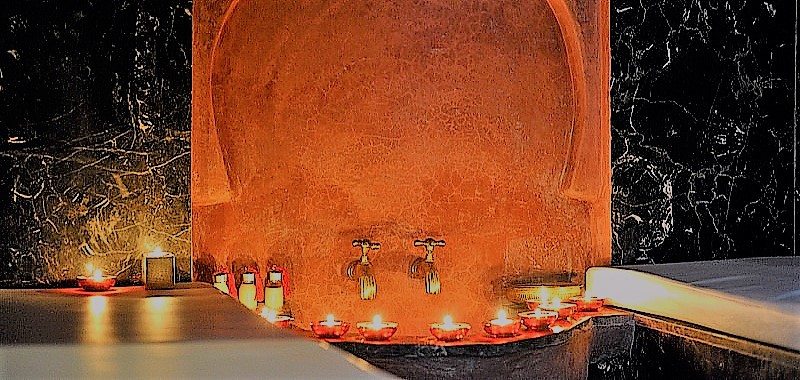
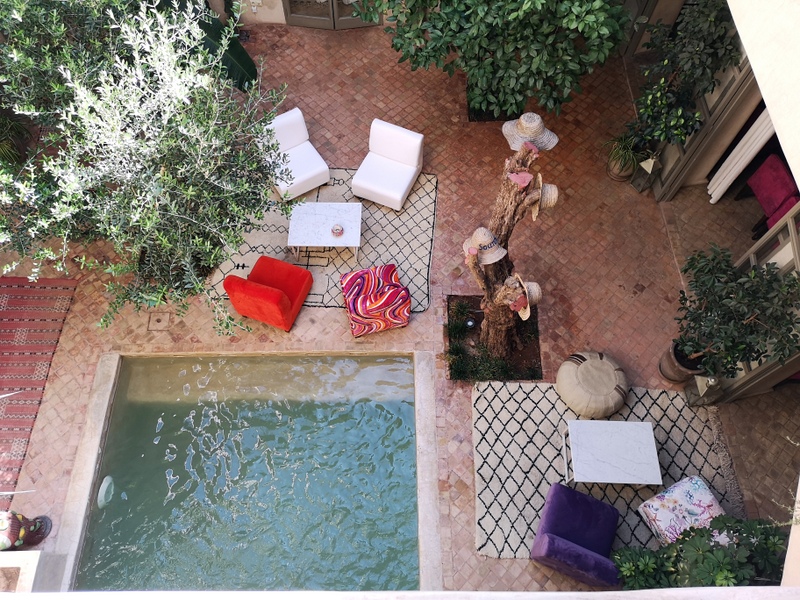
To visit Marrakech with ease, nothing beats an address in the centre of the medina. Riad Vendôme & Spa, in Dar El Bacha, puts the main monuments a few minutes' walk away, with a pool, hammam and jacuzzi to recover between visits. Discover our location or book your stay.
How Marrakech Is Laid Out: Medina, Gueliz, Hivernage and Palmeraie
Before deciding what to do, it helps to picture the shape of the city. Marrakech is several places rather than one, and the district you sleep in quietly decides the character of the whole trip.
The medina is the old walled city: a dense weave of lanes, workshops, courtyard houses and covered markets held inside ochre ramparts and their historic gates. It is where almost every monument, souk and riad sits, and it was built for people on foot rather than for cars. Staying inside the walls means stepping straight into the city instead of commuting to it.
Gueliz, the ville nouvelle laid out in the twentieth century, is the modern half: wide avenues, pavement cafés, banks, galleries, concept stores and international restaurants. It suits travellers who want familiar comforts, easy parking and quieter evenings. Hivernage, between Gueliz and the ramparts, is greener and calmer still, built around large hotels, gardens and nightlife venues. The Palmeraie, beyond the northern edge of the city, is a spread of palm groves and walled estates: peaceful, generous in space, and dependent on a car or taxi for absolutely everything.
The trade-off is simple. Sleeping in the medina costs you easy vehicle access and gives you back the entire old city on foot; sleeping outside the walls buys space and road access, and turns every sightseeing morning into a journey. Our comparison of a riad or a hotel in Marrakech and our page on where to stay in the medina go further into this choice.
The Derb: How a Medina Address Actually Works
The single thing that confuses first-time visitors most is the address itself. In the medina a derb is a lane, often a narrow one, sometimes a dead end, rarely signposted in a way a visitor would recognise as a street name. Our own address, 217 Derb El Halfaoui, follows that logic: the number belongs to a door, not to a road a car can drive down.
Many riads therefore cannot be reached by vehicle at all. Lanes narrow, turn, pass under arches and stop being wide enough for four wheels. This is not a defect: it is how the old city was built, long before cars, and it is why the medina stays quiet a few steps behind a busy thoroughfare. In practice a taxi drops you at the nearest point a car can reach, and the last stretch is walked.
Never plan on being dropped at the door of a medina riad, and never rely on a mapping app for the final lane: positioning is poor between high walls and pins are often approximate. Send your arrival time ahead and let the riad meet you at the drop-off point. That one message removes the most common source of arrival stress.
Luggage matters here too. The lanes are uneven and sometimes stepped, and a hard case with small wheels is heavier work than you expect. Staff carrying bags the last stretch is ordinary practice, not an imposition.
Getting Around: What Is Realistically Walkable
Inside the walls, walking is not merely possible; it is the fastest way to move. From a central medina base such as Dar El Bacha, the main monuments, the souks and the great square sit within an easy stroll of one another, which is why the itineraries above assume feet rather than wheels.
Between the medina and the ville nouvelle, walking is doable but rarely rewarding: the route runs alongside traffic rather than through anything worth seeing. That is where a petit taxi earns its keep. These small city taxis are metered, and asking for the meter before you set off, or agreeing the fare in advance, avoids discussion at the end. Larger grands taxis handle longer runs and airport journeys, while a transfer arranged by your riad removes the question altogether after a late flight or with children.
Horse-drawn calèches circle the ramparts and gardens and are a pleasant way to see the walls rather than a means of transport. And once inside the medina you will get lost at least once. Treat it as part of the visit, keep a landmark in mind, and remember that the lanes are short and the old city is smaller than it feels.
The Rhythm of a Marrakech Day, and of the Week
Marrakech has a daily shape, and travellers who work with it see more with less effort.
Mornings are the best hours for monuments and gardens: the light is low, the air is cooler and the crowds have not gathered. The souks wake later than you might expect, so an early start belongs to the sights rather than to shopping. By late morning the covered markets are properly alive, and stay so until well after dark. The middle of the day is the heavy part, especially in the warm months, and a long lunch, the pool or the hammam and spa is not idleness but the sensible answer to the hours when heat makes walking a chore. Late afternoon brings everyone out again, and the great square changes character entirely as the food stalls are assembled at dusk.
Across the week, two rhythms are worth knowing. The call to prayer is broadcast from mosques at set points through the day, including before dawn; it is a familiar part of the soundscape and, heard from a courtyard, a gentle one. Friday is the main day of congregational prayer, and around midday some shops and workshops close for a while before reopening; it is also traditionally the day for couscous. Plan a monument or a slow lunch into that window rather than a shopping expedition. Beyond the week, the season dictates the schedule far more than the calendar does, as covered on our page about when to visit Marrakech.
First-Visit Orientation: Courtesy, Custom and Common Sense
None of what follows is a rule about anyone else. It is simply what a visitor benefits from knowing before the first morning.
- Greetings first. A greeting before a question is ordinary courtesy here and changes the tone of an exchange completely. A word of Arabic or French, however clumsy, is received warmly.
- Bargaining. In the souks, goods without a marked price are usually negotiated, and that negotiation is an unhurried conversation rather than a contest. Ask the price, make a considered counter-offer, stay good-humoured, and walk away politely if you do not agree. Fixed-price shops and co-operatives work exactly as they do at home.
- Photography. Ask before photographing anyone, and accept a refusal without pressing. On the great square some performers earn their living from photographs and will expect a contribution, so agree it beforehand. Courtyards, doorways and rooftops make better pictures in any case.
- Dress. No dress code is imposed on visitors and the city is long used to travellers. Clothing that covers the shoulders and knees simply attracts less attention in the medina and is more comfortable in the sun; swimwear belongs to the riad pool and the spa. Most working mosques in Morocco are not open to non-Muslim visitors, which is why palaces, madrasas and gardens carry the sightseeing instead.
- Ramadan. The month of fasting moves through the calendar each year. During it the city is quieter by day and animated after sunset, some daytime services are reduced, and riads, hotels and visitor restaurants continue to serve as usual. Eating discreetly in public during daylight is a small and easy courtesy.
- Tipping. Small tips for good service are customary, in cafés and restaurants and for a porter or a guide. Keeping small notes and coins to hand makes it effortless.
The Mistakes First-Time Visitors Make
The same handful of things go wrong on a first trip, and every one of them is avoidable.
- Over-scheduling. Marrakech is not a city you tick off. Two anchors a day, one in the morning and one in the late afternoon, leave room for the terrace, the detour and the conversation you will actually remember.
- Staying too far out. A quiet address beyond the walls looks appealing until the third taxi of the day. If the trip is about the old city, sleep inside it.
- No plan for the first hours. Arrival is where a trip is won or lost: an unmet transfer, an address a driver cannot find, a lane in the dark. Confirm your arrival time, accept the meeting point, and let the first evening be dinner on a rooftop rather than a search.
- Underestimating the medina. Distances that look trivial on a map take far longer on foot, because you stop constantly. A morning in the souks is a real morning.
- Treating the pool as decoration. In the warm months the middle of the day is genuinely better spent still. Water and shade are part of the itinerary, not an extra.
- Booking excursions on the street. Day trips out of the city are worth arranging properly, with a known driver and a clear price, which is what our excursions from Marrakech page is for.
Money, Language and Staying Connected
Money. The Moroccan dirham is a closed currency: you cannot generally obtain it before you travel, and it is not meant to leave the country. Change money on arrival or in the city, and keep small denominations, because a great deal of daily life here, from a taxi to a bakery to a tip, runs on cash and on having the right change. Cards are widely accepted in riads, hotels and larger restaurants, and rarely at a souk stall.
Language. Moroccan Arabic is the everyday spoken language and Amazigh languages are widely spoken; French is used constantly in hospitality, and English is common wherever visitors go. You will be understood, and an attempt at a local greeting is welcomed rather than judged.
Connectivity. Local prepaid SIM cards and eSIMs are straightforward to arrange on arrival, and riad wi-fi covers the rest. Download an offline map before you land: a saved map with your riad pinned is worth more than a live one. Save the riad WhatsApp number in your phone before you travel, because that is how arrangements are made here.
Once the geography makes sense, the rest of the planning is easy. Choose your sights from our what to see in Marrakech guide, pick activities from things to do in Marrakech, and build the days with the Marrakech itinerary hub. Practical questions about the stay itself are answered in our Marrakech stay FAQ, and entry formalities on the Morocco tourist visa page.
Frequently Asked Questions: Planning Your Marrakech Trip
How many days do you need in Marrakech?
3 days are enough for the essentials of the medina on foot; allow 4 to 5 days to add an excursion such as the Agafay desert, the Atlas Mountains or a Sahara tour.
When is the best time to visit Marrakech?
Spring (March,May) and autumn (September,November) are mildest for sightseeing on foot. Winter is sunny and mild; summer is hot, best for the pool and spa.
What can you do in 3 days in Marrakech?
Day 1: souks, Ben Youssef Madrasa, Bahia Palace and Jemaa El-Fna. Day 2: Koutoubia, Saadian Tombs, Jardin Majorelle and YSL Museum. Day 3: an excursion (Agafay, Atlas or Ourika).
Which area should you stay in to visit everything on foot?
Dar El Bacha is the best base: quiet and central, a 7-minute walk from Jemaa El-Fna and close to the souks and main monuments. Riad Vendôme is located there.
Agafay or Merzouga: which desert excursion?
Agafay is a stony desert 40 minutes from Marrakech, ideal for a half-day or dinner under the stars. Merzouga and its Erg Chebbi dunes are the real Sahara, reached on a 3-day tour. Both are arranged with private transfers.
What to visit in Marrakech with family?
With family: Jemaa El-Fna and its performers, the gardens (Majorelle, Menara, Jardin Secret) and a horse-drawn carriage ride. From Dar El Bacha the medina is easy to explore on foot with children.
What to see in Marrakech for a first visit?
For a first time: Jemaa El-Fna, the souks, the Ben Youssef Madrasa and the Koutoubia on day one; the Bahia Palace, the Saadian Tombs and the Jardin Majorelle over two to three days.
Can you visit Marrakech with an official guide?
Yes. Through its concierge service, Riad Vendôme arranges guided tours with sworn official guides for the medina and monuments. Ask at reception or via WhatsApp +212 600 608 608.
Where exactly is Riad Vendôme located in Marrakech?
Riad Vendôme is at 217 Derb El Halfaoui, in the Dar El Bacha district of the Marrakech medina. It is a 7-minute walk from Jemaa El-Fna square, close to the Koutoubia and the souks, so you reach the main sights on foot without needing a taxi. A member of staff meets you at the nearest vehicle drop-off point on arrival.
How do I book, and how quickly do you reply?
You book directly with the riad, not through a platform. Send your dates and group size on WhatsApp at +212 600 608 608 and you receive a written quote within minutes. There is no automated booking engine: every stay is confirmed by a person, and the payment terms are set out in the quote you receive.
Can the whole riad be privatised, and for how many guests?
Yes, Riad Vendôme can be hired exclusively. The main riad has 12 rooms and goes up to 20 rooms with a partner riad 100 metres away, for exclusive hire of up to 50 guests. During an exclusive hire there are no other guests: the pool, hammam, jacuzzi and rooftop are reserved for your group alone.
What is a derb, and why can a taxi not reach my riad?
A derb is a medina lane. Many are too narrow for a vehicle, and the house number belongs to a door rather than to a driveable road. A taxi therefore stops at the nearest point a car can reach and the last stretch is walked. Send your arrival time in advance so someone can meet you there and carry your bags.
Should I stay in the medina or in Gueliz for a first visit?
For a first visit, the medina. Almost everything you have come to see is inside the walls and reachable on foot, so you spend your time visiting rather than travelling. Gueliz, the ville nouvelle, suits travellers who want wide avenues, easy parking and modern restaurants, but it turns each sightseeing morning into a taxi ride each way.
How much of Marrakech can I realistically cover on foot?
From a central medina base, essentially all of the old city: from Riad Vendôme, Jemaa El-Fna is a 7-minute walk, and the souks and the main monuments sit within 5 to 20 minutes on foot. What is not walkable in any pleasant sense is the stretch between the medina and the modern districts, or the Palmeraie. Those are short taxi rides rather than walks.
When are the souks busiest, and when should I go?
The souks open later than the monuments and are at their fullest from late morning until well after dark. Go early if you want space to look, or in the evening if you want the atmosphere. Around midday on Friday some shops and workshops close for a while, so keep that window for a monument or a long lunch.
Do I need cash in Marrakech, or are cards enough?
Both. Cards work in riads, hotels, the ville nouvelle and larger restaurants, but the souks, taxis, small cafés and tips run on cash. The dirham is a closed currency, so you change money on arrival rather than before you travel. Keeping small notes and coins to hand makes daily life considerably smoother.
What should I wear as a visitor in Marrakech?
Nothing is imposed on visitors, and the city is long accustomed to travellers. Clothing that covers the shoulders and knees simply draws less attention in the medina and the souks, and is more comfortable in the sun. Swimwear belongs to the riad pool, terrace and spa. Comfortable closed shoes matter more than anything, because the lanes are uneven.
Is it a good idea to visit during Ramadan?
It is perfectly possible, and the atmosphere after sunset is memorable. The month of fasting moves through the calendar each year. Expect a quieter city by day, some reduced daytime services, and lively evenings. Riads, hotels and visitor restaurants continue to serve as normal, and eating discreetly in public during daylight is an easy courtesy.