
 Français
  English
  Español
  Italiano
  Deutsch
  Nederlands
  Português
  Polski
  Norsk
Norsk  Svenska
  Dansk
Dansk 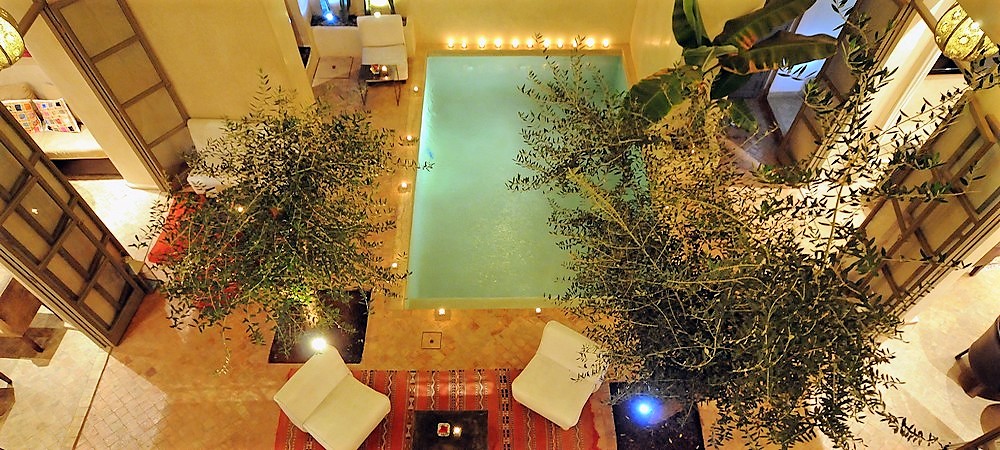
Marrakech Marathon 2027 Stay: Your Riad in the Medina
Riad Vendôme hosts runners for the Marrakech Marathon in the medina, from €245 per person for the race weekend and €315 per person for the longer stay. Early breakfast on race morning, recovery hammam and rooftop jacuzzi at 36°C, and a room kept quiet the night before. One contact throughout: Éric, owner since 2011: WhatsApp +212 600 608 608, written quote within minutes.
For the Marrakech Marathon 2027 (Sunday 31 January), Riad Vendôme & Spa welcomes runners in the heart of the medina, a few minutes from the Marathon Village (bib pickup, Koutoubia square). Recovery spa package included, early energising breakfast and late check-out on race day. Looking for the Marrakech Marathon 2026? The next (37th) edition takes place on Sunday 31 January 2027. Looking for where to stay for the Marrakech Marathon (Marrakech marathon accommodation)? Rather than a standard marathon hotel near the start, choose a medina riad with a recovery spa. Packs for 2, 3 or 4 people; for a running club or team, see our marathon group offer.
In brief: Marrakech Marathon 2027 stay
- Riad Vendôme and Spa offers runner packs for the Marrakech Marathon 2027 from 245 euros per person for 3 nights or 315 euros for 4 nights, with recovery spa, early breakfast and late check-out on race day.
- The 37th edition runs on Sunday 31 January 2027: the 42.195 km marathon starts at 7:45 AM and the 21.097 km half marathon at 9:15 AM, on a flat course in Hivernage with 15,000 to 16,000 runners.
- Bib pickup is at the Marathon Village on Koutoubia square, a few minutes walk from the riad in Dar El Bacha, while race registration stays on the official site until 24 January 2027.
- Direct booking / WhatsApp: +212 600 608 608
The Marrakech Marathon 2027 at a Glance
Plan your Marrakech marathon stay: + 212 600 608 608
(WhatsApp reply within minutes)
(Reply to your enquiry within minutes)
37th edition, under the High Patronage of His Majesty King Mohammed VI. The marathon (42.195 km) starts at 7:45 AM and the Marrakech half marathon (21.097 km) at 9:15 AM, on Sunday 31 January 2027. Start and finish on Menara Avenue, in the Hivernage district. A flat and fast course (ramparts, Menara, palm grove), reputed among the fastest, with ~15,000 to 16,000 runners and mild weather (~15-22 °C). Registration until 24 January 2027 on the official site: the riad provides accommodation and services, not race entry: Marrakech Marathon registration is handled on the official site.
A Few Minutes from the Marathon Village, in the Heart of the Medina
Bib pickup takes place at the Marathon Village, on Koutoubia square, a few minutes' walk from the riad. The start is in the Hivernage district; many runners walk to the start line to warm up (logistics arranged with you closer to race day). The riad's advantage: the authenticity of the medina and a real recovery spa, where the standardised hotels around the start area do not offer this experience.
Our Marathon Packs (2, 3 or 4 People)
Runner Pack: 3 nights (check-in 29/01, check-out 01/02) · from 245 €/person (indicative price)
Nights in a medina riad + early energising breakfast + return airport transfer + bib-pickup info + recovery spa package included (hammam, argan massage, rooftop jacuzzi). Option: dinner the night before the race (Chef Naima).
Book on WhatsAppRunner Pack: 4 nights (check-in 28/01, check-out 01/02) · from 315 €/person (indicative price)
Same as the 3-night pack + one extra night to recover or explore Marrakech. Spa package included. Ideal to combine the race with sightseeing in the medina or an excursion to Agafay.
Book on WhatsAppPacks available for double, triple or quadruple rooms (2/3/4 people). Indicative prices to be confirmed depending on dates and availability, contact us at +212 600 608 608.
Recovery Included: Spa Package
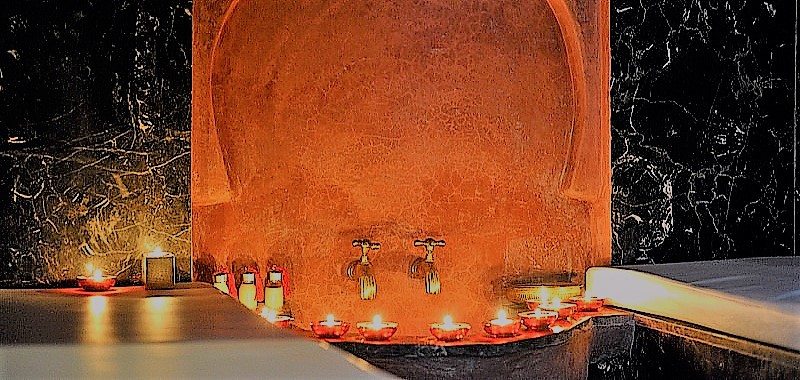
For runners: a recovery spa package with hammam, argan massage and rooftop jacuzzi, to soothe the legs after the effort. Discover also our spa, Chef Naima's cooking classes and the day pass for your companions.
Coming as a Group or a Club?
For a running team or club (25 to 35 runners), the riad can be privatised exclusively: pre-race dinner, group recovery, early breakfast and transfers. See our marathon group offer.
Your Base in the Centre of Everything: Riad Vendôme
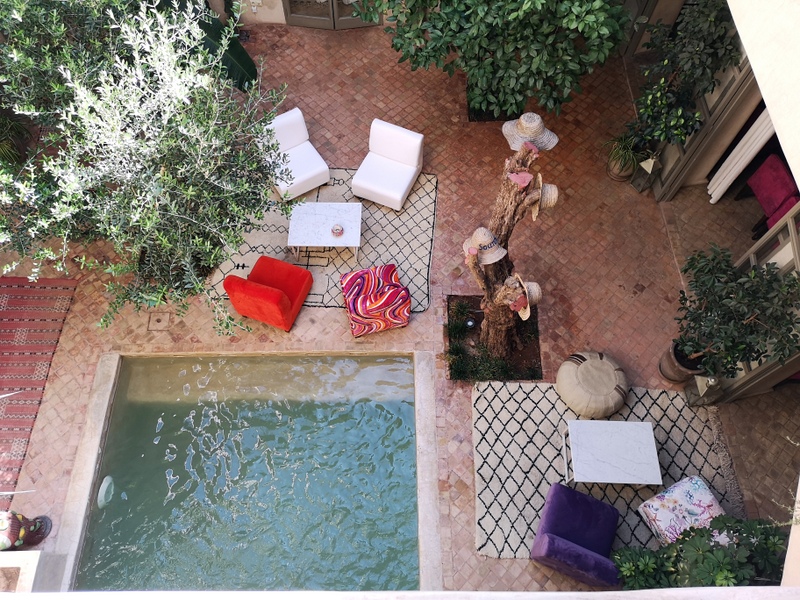
To experience the marathon with ease, nothing beats an address in the centre of the medina. Riad Vendôme & Spa, in Dar El Bacha, puts the main monuments a few minutes' walk away, with a pool, hammam and jacuzzi to recover between visits. Discover our location or book your stay.
Running a Destination Marathon Without a Club Behind You
When a club travels, somebody has already done the thinking: the flights are blocked, the transfers are booked, the bibs are collected in one go and there is always someone awake who knows what time the bus leaves. Travelling on your own, or as a pair, or as three or four friends who happen to have signed up for the same race, means that every one of those small decisions lands back on you. None of them is difficult. The problem is that there are more of them than runners expect, and they all fall in the week when you are tapering and least inclined to solve problems.
The list is short but unforgiving: getting yourself and your kit to Marrakech, getting from the airport into the medina with luggage, working out when and where you collect your bib, knowing how you reach the start on Sunday morning, and knowing that somebody will have put food in front of you before you run. A club solves all of that with a coach and a spreadsheet. An individual runner solves it by choosing a place to stay that will answer questions in writing before arrival rather than a reception desk that opens after the race has started. That is the practical difference between a marathon hotel and a house with an owner in it.
If you are in fact travelling with a team rather than as a small party, the arrangements are different and they live on a separate page: see the marathon group offer. Everything below is written for the runner arriving as one, two, three or four.
The Days Before: Arriving with Margin
The single thing experienced destination runners do differently is arrive earlier than feels necessary. Not for acclimatisation, that is a question for your own coach, but because an extra day absorbs the things that go wrong. A delayed flight, a bag that arrives on the next rotation, a bib collection you thought closed later than it does. Runners who land the day before a marathon have no slack at all, and spend the evening dealing with problems instead of lying down. The 4-night pack above exists for exactly this reason: the extra night is not sightseeing time, it is insurance.
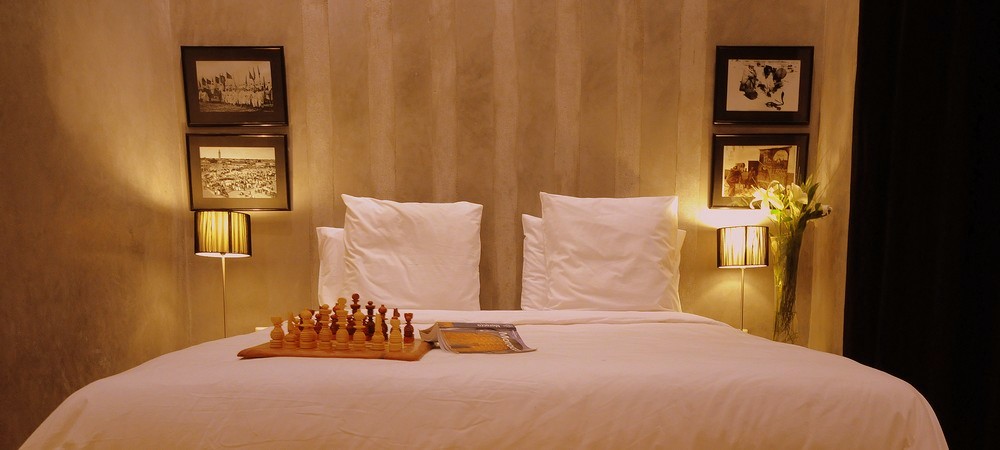
The second thing is sleep, and the honest position is that almost nobody sleeps properly in an unfamiliar bed two nights before a race. What you can control is the room. In the medina that means asking, before you book, for a room away from the street side and away from the patio, since sound travels upward in a riad and a courtyard carries voices. It also means knowing that the call to prayer is part of the soundscape here, and that earplugs are the answer rather than a complaint. Tell us when you book that you are running; a quiet room is easier to hold for you in advance than to find at ten at night.
Then there is the shakeout run. Running in a medina you do not know is genuinely awkward: the lanes are narrow, they turn, they are shared with handcarts and scooters, and a GPS watch loses its mind between high walls. Most runners staying in the medina walk out to open ground rather than trying to run the alleys, and use the ramparts or the wider avenues instead. Ask at the riad which way to turn before you go: it takes a minute and saves you the experience of being politely, thoroughly lost in your race kit.
Seeing Marrakech Without Wrecking Your Race
This is the tension nobody warns you about. You have flown to one of the great cities of North Africa and you have two clear days in it, and the correct thing to do with those days is almost nothing. Every destination runner meets this and most of them handle it badly, either by walking the souks until their calves are tight or by hiding in a hotel room and flying home having seen a start line and an airport.
There is a middle path and it is mostly about ordering. Do the standing-up things after the race, not before. Museums, the souks, the tanneries, a long wander through the medina - those are Sunday afternoon and Monday, not Friday and Saturday. Before the race, choose things you can do sitting down: a rooftop, a long lunch, a courtyard, a garden with benches. The riad itself does a lot of the work here, because a patio, a pool and a terrace mean that staying off your feet does not have to mean staying in a bedroom.
The other half of the trick is location. Being inside the medina rather than out by the start means the walk to anything worth seeing is short, and short walks are the difference between sightseeing and standing for hours. If you want a longer plan for the days that follow, our Marrakech itinerary and things to do in Marrakech pages are written for exactly the post-race half of a trip. Excursions with early starts and long transfers: the desert, the mountains, Agafay - belong after the finish line, not before it.
A simple rule that survives contact with reality: before the race, everything happens within a few minutes of where you are sleeping. After the race, the whole city is yours. Booking the extra night is what makes the second half of that sentence true.
Eating Before a Race in a Country You Do Not Know
Runners are conservative about food in race week, and rightly so: this is not the moment to discover how your stomach feels about something new. That instinct collides with being in Morocco, where the food is one of the reasons you came. We are not going to tell you what to eat, that is between you and your own plan, but we can tell you what is straightforward to arrange.
Moroccan cooking is more accommodating to runners than its reputation suggests. Bread, couscous, rice, plain grilled meat, vegetable tagines and soup are all everyday food here, not special requests, and a kitchen that cooks to order can put together something deliberately plain without ceremony. The thing that catches people out is not the ingredients but the timing: dinner in Morocco tends to start later than runners want to eat on the night before a race. That is worth naming when you book rather than discovering at nine in the evening.
A pre-race dinner with Chef Naima can be arranged as an option with the packs above, at a time that suits a morning start, and the same applies to allergies and to anything you avoid. Save the ambitious eating, and the cooking class - for after the race, when it becomes a reward rather than a risk. Tap water is not what visitors drink here; bottled water is universal and the riad keeps it available.
Race Morning on Your Own
The classic failure of a solo runner at a destination marathon is not the race. It is breakfast. Ordinary hotel breakfast service in Marrakech begins long after a runner with an early start needs to have eaten, and a buffet that opens at the usual hour is no use to you at all. This is why the packs on this page include an early breakfast on race morning as a fixed item rather than a favour: it is arranged in advance, for the time you actually need, and if that time is earlier than you think, say so when you book. Runners who do not sort this out end up eating whatever they carried from home in an airport, standing in a dark lobby.
Getting to the start is the other half. The start and finish are in Hivernage, on Menara Avenue, and the riad sits in Dar El Bacha inside the medina; many runners simply walk it as a warm-up, and others prefer to be dropped nearby. Either way the decision should be made the day before, not at first light. Two things are worth knowing in advance: the medina lanes are pedestrian, so any vehicle meets you at a fixed point rather than at the door, and that point is a short walk with a bag. Ask us to walk it through with you when you arrive.
Bib collection is its own small errand. The Marathon Village is on Koutoubia square, a few minutes on foot from the riad, which is one of the genuine advantages of being inside the medina rather than out by the start: you can collect a bib in an hour on foot, and the trip to do it is not a taxi negotiation. Take your registration confirmation and identity document with you; nobody enjoys walking back for a piece of paper.
Three things to settle in writing before you fly, rather than on arrival: what time breakfast will be served on race morning, how you leave the medina to reach the start, and what time you have to be out of your room afterwards. All three are arranged over WhatsApp before you travel, and late check-out on race day is already part of the packs above.
After the Finish: What a Runner Actually Wants
What a runner wants after a marathon is a short and unglamorous list: to stop, to get clean, to get horizontal, and to not be asked to make decisions. A destination race complicates all four, because the standard hotel answer is that your room went back to the cleaners at eleven and your flight is not until the evening. Late check-out on race day is on this page for that reason, and it matters more than anything else offered here.
Beyond that, the medina has an old answer to sore legs. The hammam is not a novelty bolted onto a running trip; it is what people here have done after hard physical days for a very long time, and the sequence of steam, black soap and a massage with argan oil is a pleasant way to spend the part of Sunday when you cannot face standing up. The recovery spa package included with the packs above, hammam, argan massage and rooftop jacuzzi, is arranged for the afternoon or evening after the race. Whether any of that does anything measurable to your legs is a question for your own coach; what it reliably does is fill the hours after a marathon better than a hotel corridor.
The day after is the day to book the extra night for. Stairs are the enemy, walking is slow, and everything you deferred from before the race is now available at the pace you can manage. If you have to fly home the same evening you finish, you will remember the airport rather than the city.
Bringing Someone Who Is Not Running
Most solo runners do not actually travel alone; they travel with a partner or a friend who has agreed to come and is quietly wondering what they are supposed to do on Sunday morning. This is worth planning honestly, because a non-running companion at a destination marathon can have a very good trip or a very dull one, and the difference is entirely in the arrangements.
Their weekend does not have to be organised around yours. While you are on the course they can be in the spa, at a cooking class, on the terrace with a book, or out in the souks doing the walking you are avoiding. A day pass covers the pool and the spa for a companion who wants a slow morning. The only thing worth agreeing in advance is the meeting point and the rough hour you expect to be back, since phone signal near a finish line is unreliable everywhere in the world and Marrakech is no exception.
The tactful point, for the runner: the days before the race are the ones where a companion gets least of you, because you are keeping off your feet. Say so early, and plan their Friday and Saturday around things you are happy to sit out. Trade it back afterwards, when you are the one who cannot walk fast and they are the one choosing where dinner is.
What Runners Forget to Pack for a January Marathon Abroad
The forgotten items are always the same, and they are almost never the shoes. What catches people out is the gap between the temperature they read about and the conditions they actually meet: mild in the middle of the day does not mean warm before sunrise, and standing around in a start pen at dawn is a different experience from running at noon. Something to wear over your kit that you do not mind abandoning at the start is the classic omission.
- A throwaway layer for the start pen, plus something warm for the walk back afterwards, when you will be cold and slow.
- Sun protection you would not think to pack in January: the sun here is stronger than the air temperature suggests, and a cap and sunglasses earn their place.
- Earplugs and an eye mask. An unfamiliar bed in an old city is not a silent, dark one.
- Every piece of race kit in your hand luggage, shoes, kit, watch, charger, gels. Checked bags occasionally arrive later than their owners, and none of these can be replaced properly on a Saturday afternoon in a foreign city.
- Your own supplies of whatever you take during a race. Assume nothing familiar is on sale locally.
- Printed registration confirmation and identity document for bib collection, on paper as well as on a phone.
- Flip-flops or loose sandals for the day after, when laced shoes stop being appealing, and for the hammam.
- A small amount of local cash. Card acceptance in the medina is patchy and taxis are a cash business.
- Any medication you normally rely on, in its original packaging, and travel insurance details somewhere you can find them.
Two administrative items belong on the same list: check your passport validity and entry requirements well before you fly, our Morocco entry and visa page covers the basics, and confirm your airport transfer in advance rather than arriving and improvising, since the medina cannot be reached by car to the door. Both are included in the packs above and both are the kind of thing a club would have handled for you.
Frequently Asked Questions: Marrakech Marathon 2027
Where to stay for the Marrakech Marathon?
At Riad Vendôme & Spa, a charming medina riad (Dar El Bacha), with a recovery spa package included, early breakfast and late check-out on race day. A few minutes' walk from the Marathon Village.
How far is the bib pickup (Marathon Village)?
The Marathon Village, where bibs are collected, is on Koutoubia square, a few minutes' walk from the riad in the medina. Collection is on Friday 29 and Saturday 30 January 2027, 09:30 to 19:30 on both days, and a passport is required (source: marathon-marrakech.com).
How do you reach the start line on race day?
The start and finish are in Hivernage, on Menara Avenue, in the Hivernage district while the riad is in the medina. Many runners walk there to warm up; we arrange the logistics with you closer to race day.
Is post-race recovery included?
Yes: the spa package (hammam, argan massage, rooftop jacuzzi) is included to soothe the legs after the effort.
Do you offer a dinner the night before the race?
Yes, a suitable dinner the night before can be arranged with Chef Naima (optional).
Can I come with a non-running companion?
Of course: companions enjoy the spa, cooking classes, the medina and excursions while you run.
What is the weather like in Marrakech in late January?
Mild, generally between 15 and 22°C during the day, comfortable conditions for running.
How do you register for the Marrakech Marathon 2027?
Registration is on the marathon's official site (until 24 January 2027). The riad provides accommodation and services, not race entry.
Does the Marrakech Marathon take place in 2026 or 2027?
The next edition (the 37th) is in 2027: it takes place on Sunday 31 January 2027. There is no separate 2026 edition: searches for "Marrakech Marathon 2026" refer to this same upcoming race.
How do I book, and how quickly do you reply?
You book directly with the riad, not through a platform. Send your dates and group size on WhatsApp at +212 600 608 608 and you receive a written quote within minutes. There is no automated booking engine: every stay is confirmed by a person, and the payment terms are set out in the quote you receive.
Can the whole riad be privatised, and for how many guests?
Yes, Riad Vendôme can be hired exclusively. The main riad has 12 rooms and goes up to 20 rooms with a partner riad 100 metres away, for exclusive hire of up to 50 guests. During an exclusive hire there are no other guests: the pool, hammam, jacuzzi and rooftop are reserved for your group alone.
I am running alone, not with a club. Is that a problem here?
No. The packs on this page are built for one, two, three or four people rather than for teams. What a club normally supplies, transfers, an early breakfast, someone who knows where bib collection is and what time you should leave: is arranged directly with you over WhatsApp before you travel, so you are not solving logistics alone in race week.
How early should I arrive before race day?
Earlier than feels strictly necessary. An extra day is insurance against a delayed flight, a bag that arrives on a later rotation or a bib collection that closes sooner than you expected. Runners who land the day before have no slack and spend the evening fixing problems instead of resting. The longer pack exists for that reason: the extra night is margin, not sightseeing.
Can I do a shakeout run from the riad?
Yes, but ask which way to go before you set off. The medina lanes are narrow, they turn constantly, they are shared with handcarts and scooters, and a GPS watch struggles between high walls. Most runners walk out to open ground and use the ramparts or the wider avenues instead of trying to run the alleys. We will point you in the right direction when you arrive.
How do I see Marrakech without ruining my legs before the race?
Change the order rather than cancelling anything. Keep the standing-up sightseeing, souks, museums, long wanders: for after the finish, and before the race choose things you can do sitting down: a rooftop, a courtyard, a long lunch, a garden. Staying inside the medina keeps every walk short, and the riad patio, pool and terrace mean staying off your feet does not mean staying in your room.
Can I get a plain, simple meal the night before if I am cautious about food?
Yes. Bread, couscous, rice, soup, plain grilled meat and vegetable tagines are everyday cooking here, not special requests, and the kitchen cooks to order. Tell us when you book what you avoid and, just as importantly, what time you want to eat: dinner in Morocco tends to start later than a runner wants on the night before a race, so the hour is set in advance.
What if hotel breakfast opens after I need to leave on race morning?
That is exactly the problem the early breakfast solves. It is a fixed part of the runner packs rather than a favour asked at reception, and it is arranged for the time you actually need rather than the time service normally begins. Tell us your intended departure when you book, and if it is earlier than you first thought, send a message and we will move it.
What should I pack that runners typically forget for a January race abroad?
A throwaway layer for the start and something warm for the walk back afterwards; sun protection, because the sun is stronger than the air suggests; earplugs and an eye mask for an unfamiliar bed; loose sandals for the day after and for the hammam; local cash, since card acceptance in the medina is patchy. Carry all race kit, shoes, watch, charger and supplies in hand luggage.
Coming as a Group or a Club?
For a running team or club (25 to 35 runners), the riad can be privatised exclusively: pre-race dinner, group recovery, early breakfast and transfers. See our marathon group offer .