 Français
  English
  Español
  Italiano
  Deutsch
  Nederlands
  Português
  Polski
  Norsk
Norsk  Svenska
  Dansk
Dansk 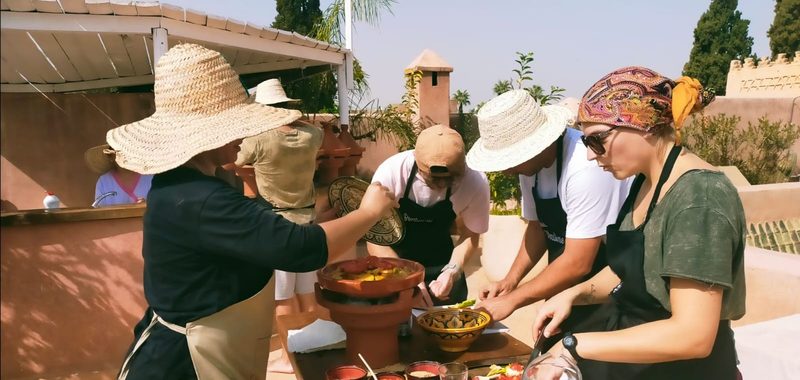
Authentic Lamb Tajine Recipe: By Chef Naima Marrakech
Discover the authentic recipe for Moroccan lamb tajine with prunes and almonds, as taught by Chef Naima at Riad Vendôme Marrakech (5.0/5 on Google). This slow-cooked dish is the cornerstone of Moroccan home cooking: a perfect balance of tender lamb, sweet prunes, crunchy almonds, and aromatic Ras El Hanout spices. Below is the complete step-by-step recipe, or learn it in person at our cooking class in the medina (€48/person).
In brief: Moroccan lamb tajine recipe
- Chef Naima's lamb tajine with prunes and almonds uses 1.2 kg of lamb shoulder for 6 servings and takes about 3 hours of slow cooking.
- The ingredient list includes Ras El Hanout from the Lalla Aicha souk in Marrakech, argan oil, 200 g of prunes, 100 g of blanched almonds, honey, saffron and orange blossom water.
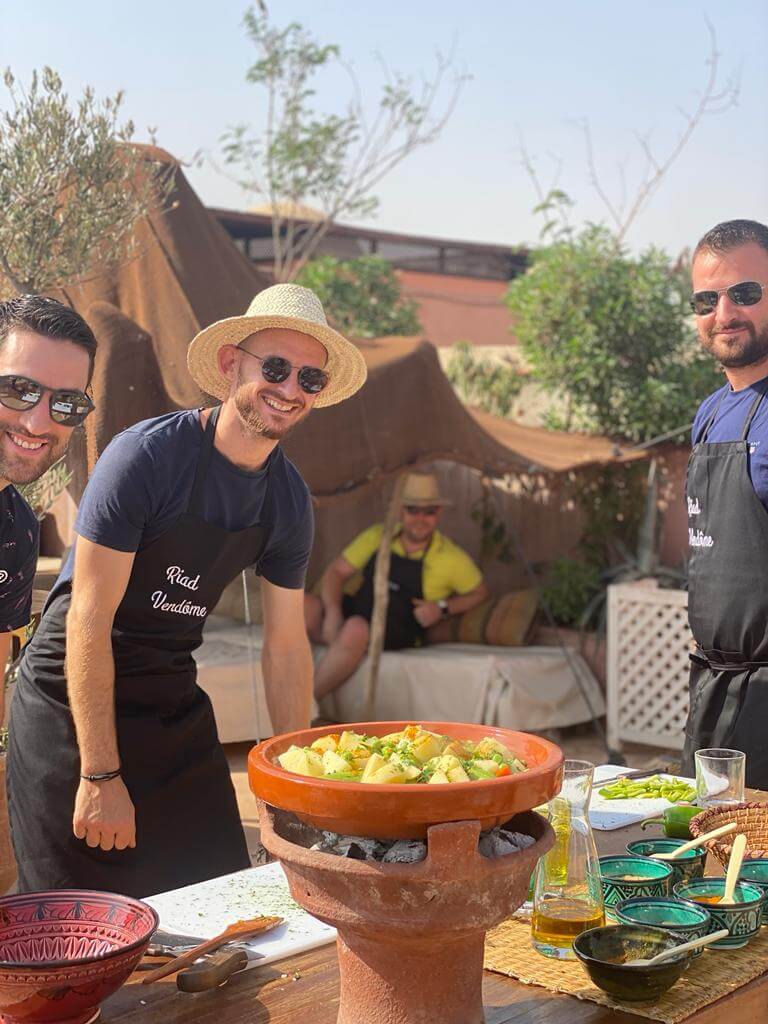
- The same recipe is taught in person at Riad Vendôme in the Marrakech medina during a 3-hour cooking class for a maximum of 8 people, at €48 per person.
- Direct booking / WhatsApp: +212 600 608 608
Prices updated in October 2026.
About This Recipe - Chef Naima's Approach
Chef Naima learned this recipe from her grandmother in the Souss valley, southern Morocco. Unlike the simplified versions taught in tourist cooking classes, her authentic lamb tajine respects the 3-hour slow cooking that transforms tough cuts of lamb into meltingly tender meat. The secret is patience, and the right spice blend (Ras El Hanout from Lalla Aicha souk in Marrakech).
This recipe yields 6 generous servings, ideal for a Sunday family lunch or a weekend gathering with friends. At Riad Vendôme, Chef Naima teaches this exact recipe to small groups (4-8 people) as part of our €48 cooking class.
Ingredients (Serves 6)
For the Lamb Tajine
- 1.2 kg lamb shoulder, cubed (or shank for richer flavour)
- 2 large red onions, finely sliced
- 4 ripe tomatoes, peeled and chopped
- 200 g prunes, pitted
- 100 g whole almonds, blanched
- 3 tablespoons argan oil (or olive oil)
- 2 tablespoons Ras El Hanout (Moroccan spice blend)
- 1 teaspoon ground ginger
- 1 teaspoon ground cinnamon
- 1 pinch saffron threads (optional but authentic)
- 1 tablespoon honey
- 2 tablespoons fresh coriander, chopped
- 2 tablespoons fresh parsley, chopped
- Sea salt and freshly ground black pepper
- 1 tablespoon orange blossom water
- Sesame seeds for garnish
Step-by-Step Instructions
Step 1: Brown the Lamb (10 minutes)
Heat 3 tablespoons of argan oil in a tajine or heavy-based casserole over medium-high heat. Brown the lamb pieces on all sides, in batches if needed to avoid overcrowding. This takes about 8-10 minutes total. Season with sea salt and black pepper. The browning builds the foundational flavour of the dish.
Step 2: Add Spices and Onions (5 minutes)
Add the sliced onions, Ras El Hanout, ginger, cinnamon, and saffron to the lamb. Stir over medium heat for 3-5 minutes until the onions soften and the spices release their aroma. Your kitchen should smell wonderfully fragrant by now.
Step 3: Add Tomatoes and Liquid (5 minutes)
Add the chopped tomatoes, a glass of water (approximately 250 ml), and a tablespoon of honey. The honey balances the acidity of the tomatoes and adds depth. Bring everything to a gentle simmer.
Step 4: Slow Cook (2 hours)
Cover with the tajine lid (or casserole lid) and reduce heat to very low. Simmer gently for 2 hours. Do not lift the lid frequently: the steam circulation is essential. Check once every 30 minutes and add a splash of water if needed to prevent sticking. The lamb should become increasingly tender.
Step 5: Add Prunes and Almonds (30 minutes)
After 2 hours, add the pitted prunes and blanched almonds. Stir gently. Cover again and continue cooking for another 30 minutes. By the end, the prunes will have absorbed the spiced sauce and become plump and glossy. The lamb should be meltingly tender, you should be able to cut it with a spoon.
Step 6: Finish and Serve
Just before serving, drizzle the orange blossom water over the dish and scatter the fresh coriander and parsley on top. Sprinkle sesame seeds for the final touch. Serve directly from the tajine, with warm khobz (Moroccan round bread) for dipping into the rich sauce, or with couscous. Pour fresh mint tea on the side.
Chef Naima's Pro Tips
1. Quality matters more than quantity. A small amount of authentic Ras El Hanout from Marrakech's souks transforms the dish. Avoid generic pre-mixed Moroccan spices from supermarkets.
2. Patience is the secret ingredient. The 3-hour cooking time cannot be rushed. The slow cooking is what makes the lamb melt in the mouth.
3. Argan oil over olive oil. If you can source authentic Moroccan argan oil (not the cosmetic version), use it for browning the lamb. The nutty flavour is incomparable.
4. Prepare a day ahead. Like many slow-cooked dishes, lamb tajine is even better the next day. The flavours deepen overnight in the fridge. Reheat gently before serving.
5. Serve in the tajine. If you have a traditional tajine pot, serve directly in it for the authentic experience. The conical lid keeps the food warm during the meal.
Variations on Lamb Tajine
Once you master the classic recipe, try these traditional Moroccan variations:
- Lamb tajine with quince: Replace prunes with quince in autumn for a different sweet note
- Lamb tajine with apricots: Use dried apricots for a lighter, more aromatic version
- Lamb tajine with vegetables: Add carrots, courgettes, and peppers for a more rustic version
- Tajine M'qualli: Lamb with preserved lemons and olives, the famous Berber version
- Lamb mrouzia: Festive version with honey, almonds, and Ras El Hanout (Eid celebration dish)
The History of Lamb Tajine in Moroccan Cuisine
Lamb tajine has been a cornerstone of Moroccan cuisine for over a thousand years. The dish takes its name from the conical clay pot in which it is cooked: itself a brilliant Berber invention designed for the desert climate of North Africa.
The conical lid of the tajine pot is engineered to recirculate moisture continuously: steam rises, condenses on the cooler walls, and drips back onto the food. This means even tough cuts of meat tenderise without drying out: perfect for Morocco's historic semi-nomadic lifestyle, where slow-cooking food over modest charcoal embers while travellers attended to other tasks was essential.
The combination of sweet and savoury in dishes like lamb tajine with prunes reflects Morocco's cultural crossroads heritage: Berber traditions (slow-cooked meats), Arab influences (sweet-savoury combinations from medieval Andalusia), and African flavours (spices from trans-Saharan trade routes including saffron, cinnamon, and cumin).
Today, lamb tajine remains the Sunday lunch tradition in many Moroccan families, especially in the south where lamb is more accessible than seafood. At Riad Vendôme, Chef Naima continues this tradition: every Friday, she prepares a fresh lamb tajine for guests staying at the riad, a ritual she has maintained since 2011.
Pairing Lamb Tajine with Moroccan Wines and Mint Tea
Morocco produces excellent red wines that pair beautifully with lamb tajine. Look for wines from the Meknès region: Chateau Roslane Premier Cru, Domaine de la Zouina, or Volubilia Rouge. These full-bodied reds (predominantly Syrah, Grenache, Carignan) handle the rich spices of the tajine while balancing the sweetness of the prunes.
For non-alcoholic pairing, the traditional choice is Moroccan mint tea served before, during, or after the meal. The fresh mint cuts through the richness of the lamb fat, while the green tea aids digestion. Pour from height to create the signature foam, a marker of a properly served Moroccan tea.
Storing and Reheating Lamb Tajine
Refrigerator (3-4 days): Allow the tajine to cool completely, then transfer to an airtight container. Reheat gently over low heat with a splash of water to restore moisture. The flavours intensify after 24 hours, making leftovers arguably better than the freshly cooked dish.
Freezer (up to 3 months): Portion the cooled tajine into freezer-safe containers. Defrost overnight in the fridge before reheating gently on the stove. The texture of the lamb remains excellent; the prunes may soften slightly but retain their flavour. Add fresh herbs before serving to brighten the dish.
Reheating tip from Chef Naima: Never microwave a tajine. The uneven heating dries out the lamb and ruins the texture. Always reheat slowly on the stove in the original tajine pot or a heavy casserole.
Common Mistakes to Avoid
Mistake #1: Using too much liquid. A tajine is not a stew. The conical lid recirculates moisture, so you need much less liquid than for a Western braise. Start with one glass of water and add only if necessary.
Mistake #2: Cooking on high heat. The signature meltingly tender texture only happens with very low, slow cooking. If your tajine is boiling, your heat is too high.
Mistake #3: Adding prunes too early. If you add prunes at the start, they disintegrate completely. Add them in the last 30 minutes for plump, glossy prunes that retain their shape.
Mistake #4: Skipping the browning step. Browning the lamb at the start develops the foundational flavour. Skipping this step results in a pale, less complex tajine.
Learn This Recipe In Person at Riad Vendôme Marrakech
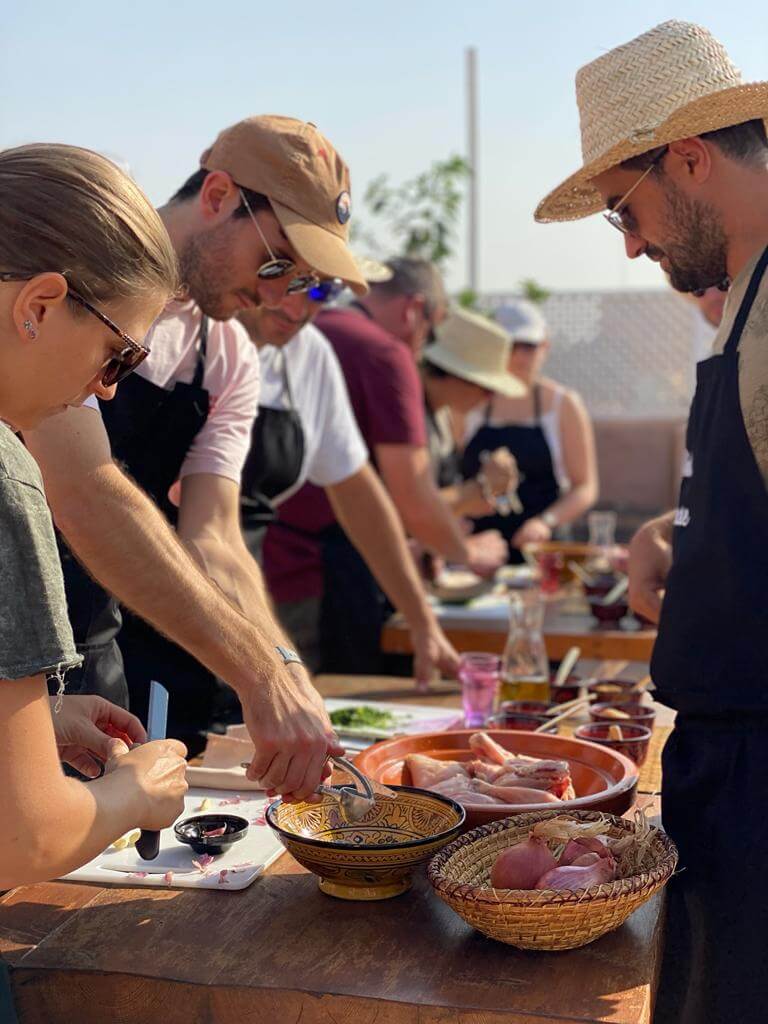
Reading a recipe is one thing: learning from Chef Naima in her authentic Marrakech kitchen is another. Our cooking class includes:
- Souk visit with Chef Naima to select ingredients at Lalla Aicha souk
- Hands-on cooking of 3-course menu including lamb tajine
- Traditional Moroccan salads (zaalouk, taktouka)
- Pastries: almond ghriba or sesame fekkas
- Lunch: enjoy what you've cooked, with mint tea
- Recipe booklet to take home
Price: €48/person (3 hours, max 8 people per class)
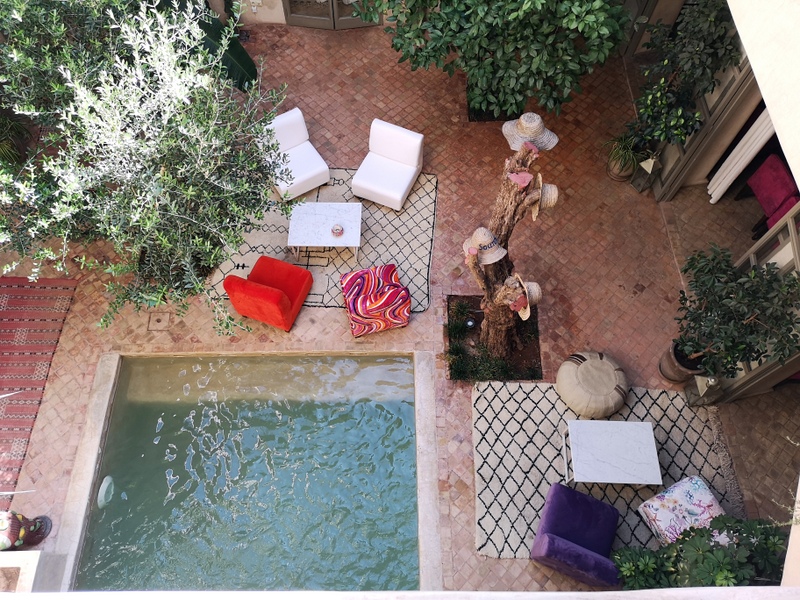
5.0/5 on Google. Chef Naima speaks English, French, and Arabic. The class takes place at Riad Vendôme & Spa in Dar El Bacha, the heart of Marrakech medina.
Related Cooking Content
Explore more Moroccan cuisine content from Chef Naima and Riad Vendôme:
- Cooking class Marrakech with Chef Naima: full class details and booking
- Moroccan cooking class: traditional techniques explained
- Meet Chef Naima: biography and culinary philosophy
- Cooking class + spa package: from €97/pp
- Cooking class prices: full pricing €48/pp
Book Chef Naima's Cooking Class
Éric Guyomard, owner, Riad Vendôme & Spa Marrakech
Chef Naima, head chef (5.0/5 on Google)
WhatsApp: +212 600 608 608
Email: contact@riad-vendome-marrakech.com